

_Как молекулярная архитектура управляет разделением частиц и удобоукладываемостью_
Когда инженеры оценивают эффективность суперпластификатора на основе поликарбоксилатного эфира (PCE), первые наблюдения обычно проводятся на макроскопическом уровне.
Бетон растекается легче.
Осадка конуса увеличивается.
Требуется меньше воды затворения.
Свежий бетон остается удобоукладываемым в течение более длительного периода.
Эти улучшения сразу видны на строительной площадке.
Что нельзя увидеть, так это то, что каждое из этих изменений характеристик originates на микроскопическом уровне.
Миллионы частиц цемента сталкиваются, притягиваются друг к другу, диспергируются и непрерывно реорганизуются в процессе гидратации.
Понимание этих микроскопических взаимодействий необходимо для современного состава PCE.
Цель суперпластификатора — не просто снизить потребность в воде.
Его основная функция — контролировать, как частицы цемента взаимодействуют друг с другом с момента добавления воды до тех пор, пока гидратация постепенно не превратит свежую смесь в затвердевший бетон.
Почему цемент флокулирует при добавлении воды?
Сухой цемент выглядит как мелкий порошок, состоящий из отдельных частиц.
Однако после добавления воды эти частицы не остаются равномерно разделенными.
Вместо этого они быстро начинают образовывать скопления, известные как флокулы.
Несколько механизмов способствуют этому поведению.
Притягательные электростатические силы сближают соседние частицы.
Продукты гидратации начинают образовываться на поверхностях частиц почти сразу.
Очень мелкие частицы соединяют более крупные частицы.
Шероховатость поверхности усиливает механическое сцепление.
Результатом является постоянно меняющаяся сеть агломерированных частиц цемента.
Внутри этих флокул значительное количество воды оказывается физически захваченным.
Захваченная флокулами вода мало способствует удобоукладываемости, поскольку она больше не может смазывать смесь.
Тогда составы смесей требуют дополнительной воды просто для поддержания приемлемой текучести.
Без эффективного диспергатора большая часть доступной воды используется неэффективно.
Почему электростатического отталкивания больше недостаточно
Ранние поколения суперпластификаторов полагались преимущественно на электростатическое отталкивание.
После адсорбции на частицах цемента отрицательно заряженные функциональные группы увеличивали электрический потенциал вокруг каждой частицы.
Частицы с одинаковыми зарядами естественным образом отталкивали друг друга.
В течение многих лет этот механизм оказывался весьма успешным.
Современная технология бетона теперь предъявляет более высокие требования к дисперсии.
Сегодняшние смеси часто содержат:
- Дополнительные цементирующие материалы (SCM)
- Известняковые наполнители
- Микрокремнезем
- Золу-унос
- Молотый гранулированный доменный шлак
- Обожженные глины
- Модификаторы вязкости
- Переработанные заполнители
Каждый компонент влияет на взаимодействие частиц по-разному.
Электростатического отталкивания часто недостаточно для поддержания долгосрочной дисперсии в этих все более сложных условиях.
Разработка гребнеобразных PCE-полимеров представила второй механизм, который фундаментально изменил технологию добавок.
Как стерическое препятствие удерживает частицы цемента на расстоянии
В отличие от более ранних диспергаторов, молекулы PCE не полагаются исключительно на электрический заряд.
После адсорбции на поверхности цемента их длинные полиэфирные боковые цепи простираются наружу в окружающий поровый раствор.
Эти гибкие цепи занимают физическое пространство вокруг каждой частицы цемента.
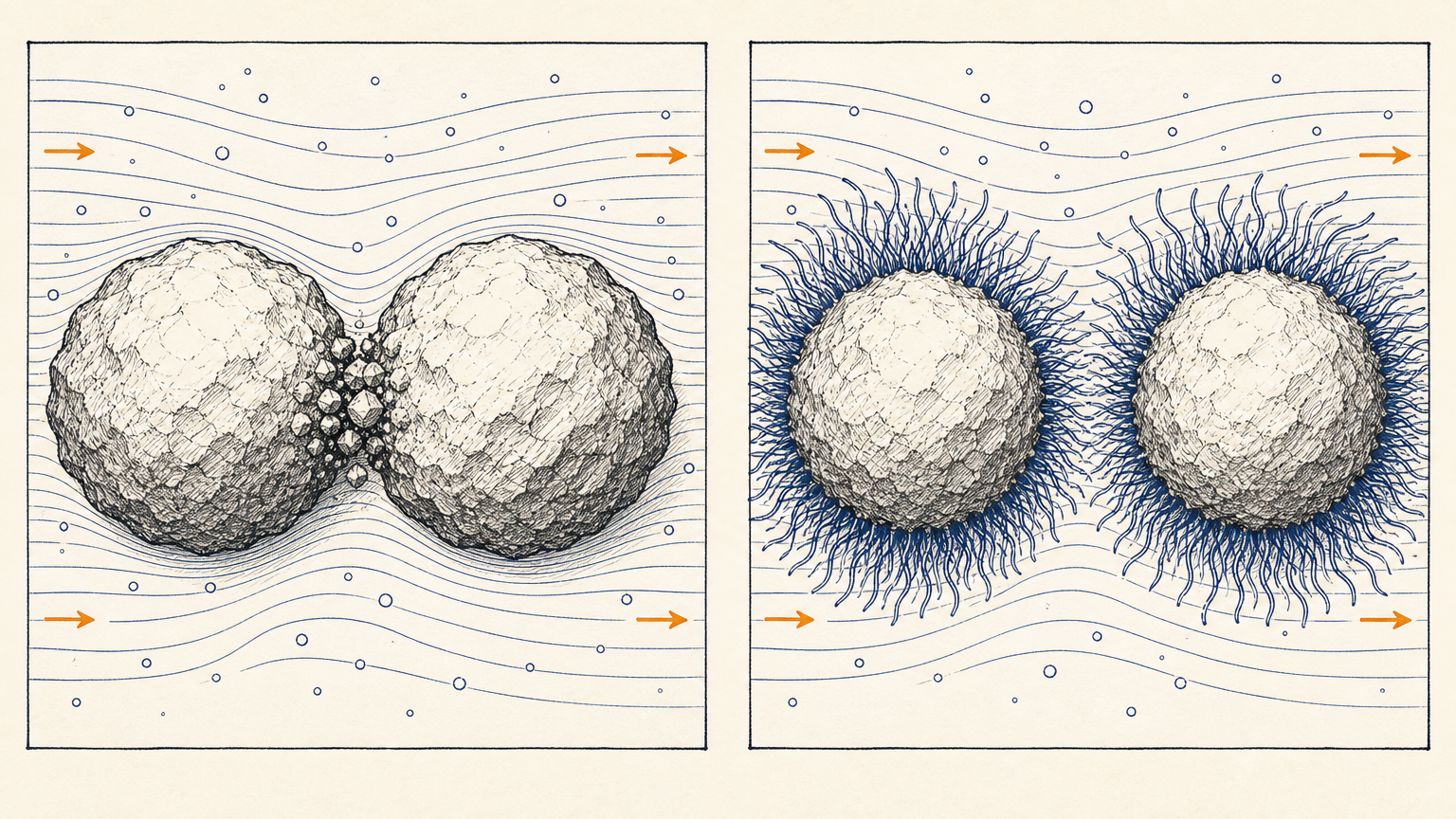
Когда соседние частицы сближаются, боковые цепи начинают перекрываться.
Это перекрытие создает энергетический барьер, который сопротивляется дальнейшему сближению.
Вместо того чтобы позволять частицам контактировать напрямую, полимер создает микроскопический защитный слой вокруг каждого зерна цемента.
Этот процесс напоминает густо посаженные деревья, чьи ветви не позволяют соседним стволам соприкасаться.
Жесткого барьера не существует.
Вместо этого ветви просто занимают достаточно пространства, чтобы прямой контакт становился все более затруднительным.
Это явление известно как стерическое препятствие.
В отличие от электростатического отталкивания, стерическая стабилизация остается эффективной при изменении ионной силы порового раствора.
По этой причине стерическое препятствие стало определяющей особенностью современных поликарбоксилатных суперпластификаторов.
Означает ли более сильная адсорбция лучшую дисперсию?
Важное недоразумение иногда возникает в технических обсуждениях.
Некоторые предполагают, что более сильная адсорбция автоматически приводит к лучшим характеристикам бетона.
Эта взаимосвязь более тонкая.
Адсорбция просто закрепляет полимер на поверхности цемента.
Без достаточной адсорбции полимер не может выполнять свою диспергирующую функцию.
Чрезмерная адсорбция не всегда желательна.
Если адсорбция происходит слишком быстро или слишком сильно, молекулы полимера могут концентрироваться на отдельных частицах, оставляя другие недостаточно защищенными.
И наоборот, слабая адсорбция может снизить общую эффективность дисперсии.
Поэтому целью является контролируемая адсорбция, а не максимальная адсорбция.
Успешный молекулярный дизайн балансирует:
- Скорость адсорбции
- Покрытие поверхности
- Протяженность боковых цепей
- Подвижность полимера
- Поведение десорбции в процессе гидратации
Этот баланс варьируется в зависимости от химии цемента, доступности сульфатов и состава окружающего порового раствора.
Как геометрия боковых цепей изменяет дисперсию
Эффективность стерического препятствия сильно зависит от геометрии самого полимера.
Более длинные боковые цепи создают более толстый стерический слой, а более высокая плотность прививки размещает больше их на поверхности.
Гибкость основной цепи затем определяет, насколько хорошо полимер адаптируется к неровной частице, а распределение молекулярной массы определяет, насколько равномерно это выражается во всей популяции полимера.
Эти переменные объясняют, почему полимеры, построенные из разных макромономеров, таких как HPEG 2400 и TPEG 2400, диспергируются по-разному даже при одинаковой дозировке.
Длина цепи, в частности, является компромиссом, а не улучшением, и затраты на производство и консистентность, которые она несет, рассматриваются в сколько стоит более длинная боковая цепь.
Что меняется, когда цемент не является обычным портландцементом
Суперпластификатор разрабатывается под конкретный цемент, а не в абстракции. Снижение выбросов углерода сейчас переводит бетон с обычного портландцемента быстрее, чем большинство рецептур было создано, чтобы за этим следовать.
Вяжущие, занимающие его место, гидратируются по разным графикам и демонстрируют различную поверхностную химию:
- Портландцемент с известняком (PLC)
- Цемент с известняком и обожжённой глиной (LC³)
- Шлаковый цемент с высоким содержанием шлака
- Вяжущие, богатые золой-уносом
- Щелочно-активированные материалы
Адсорбция — это то, где это проявляется в первую очередь, а дозировка — то, где завод замечает это.
Пять переменных со стороны цемента наносят основной ущерб: содержание C₃A, сульфатный баланс, тонкость помола, содержание щелочей и наличие дополнительных материалов. Два завода, использующих один и тот же PCE, могут сообщать о разном водоредукции и сохранении осадки при соблюдении идентичных процедур.
Европейский производитель столкнулся именно с такой ситуацией. Одна рецептура отлично удерживала осадку на местном цементе и теряла удобоукладываемость при использовании того же продукта на соседних рынках, и причина была traced к балансу гипса, изменяющему адсорбцию в ранней гидратации.
Инженеры не перерабатывали этот полимер. Они расширили его окно совместимости, пока он не стал работать с несколькими региональными химическими составами, что является более дешёвым решением почти в каждом случае.
Практическое следствие для тех, кто поставляет продукцию на рынок смешанных цементов, — переквалифицировать продукт на вяжущем, которое фактически использует заказчик, а не на эталонном цементе, под который была создана рецептура.
Расширение окна совместимости — это работа, выполняемая внутри архитектуры, которую уже задал макромономер. Платформа для сохранения осадки, такая как EPEG 3000
начинается с другой геометрии боковой цепи, чем у HPEG, поэтому диапазон, которого может достичь составитель рецептуры без перепроектирования, был определён на мономере.
В какой архитектуре работает завод — это вопрос сертификата, решаемый по гидроксильному числу и сохранению двойной связи до первой пробной партии.
Три стадии, через которые должен пройти PCE
Три последовательных процесса определяют свойства свежего бетона.
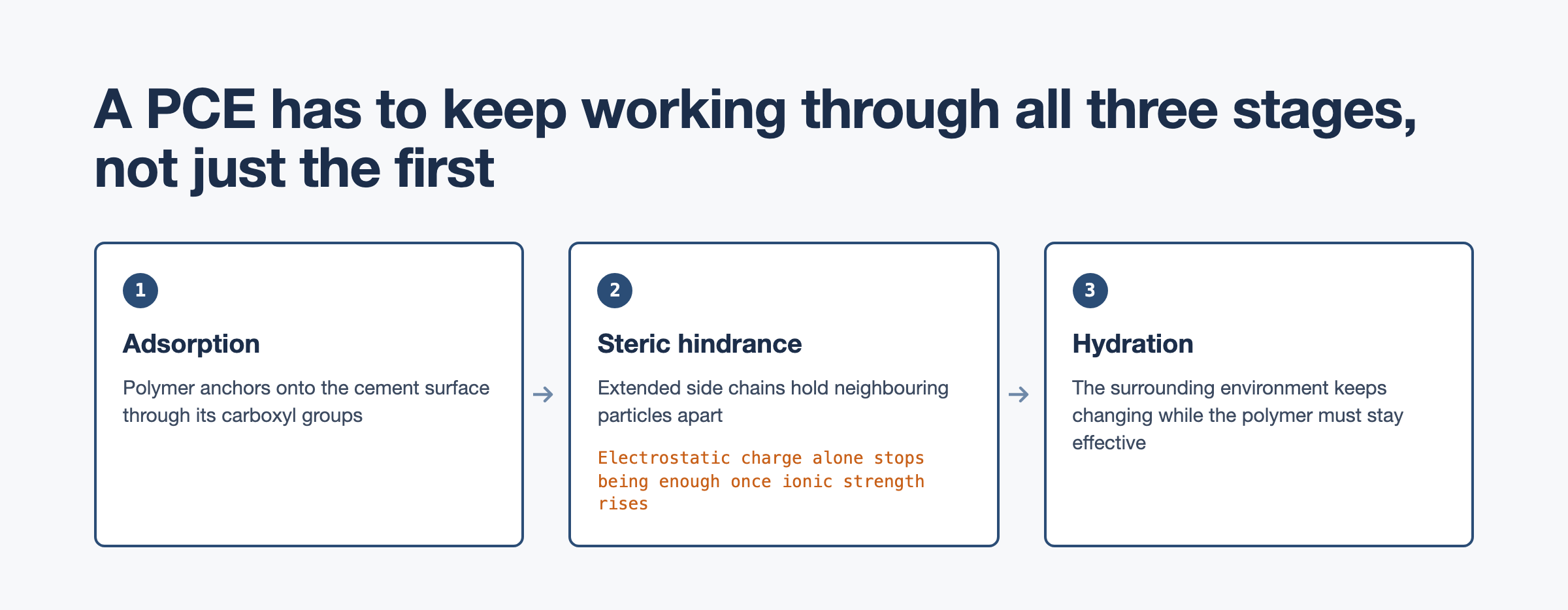
Адсорбция закрепляет полимер на поверхности цемента.
Стерическое отталкивание поддерживает разделение частиц.
Гидратация непрерывно изменяет среду, в которой должен функционировать полимер.
Успешная рецептура PCE должна поэтому оставаться эффективной на всех трёх стадиях, а не оптимизировать только первую.
Понимание этой последовательности смещает разработку рецептур от максимизации отдельных лабораторных параметров к проектированию молекулярных систем, которые выдерживают реальные условия строительства.
Из чего состоит гребнеобразный полимер PCE
Современные поликарбоксилатные суперпластификаторы часто описываются как гребнеобразные полимеры.
Это описание — не просто удобная иллюстрация.
Оно объясняет, почему молекулярная архитектура оказывает такое глубокое влияние на свойства бетона.
Основная цепь полимера закрепляется на поверхности частиц цемента через карбоксильные функциональные группы.
К этой основной цепи присоединены многочисленные полиэфирные боковые цепи, простирающиеся наружу в окружающую водную фазу.
Эти боковые цепи создают физическое разделение между соседними частицами цемента. Разделённые частицы меньше флокулируют и распределяются более равномерно.
Эффективность этого механизма зависит не просто от наличия боковых цепей, а от того, как они распределены по всему полимеру.
Несколько архитектурных характеристик становятся важными:
- Плотность боковых цепей
- Длина боковых цепей
- Расстояние между точками прививки
- Гибкость основной цепи
- Общее распределение молекулярной массы
Изменение любой из этих переменных влияет на пространственную конфигурацию всего полимера.
Модификация полиэфирного макромономера изменяет поведение готового PCE способами, которые выходят далеко за пределы лабораторных измерений.
Что Это Означает на Практике
Полезный вопрос о PCE — не сколько воды он удаляет из состава смеси. А как ведёт себя система частиц с первых минут смешивания до укладки.
Адсорбция только закрепляет полимер на поверхности цемента. Стерическое отталкивание — это то, что удерживает частицы на расстоянии, а гидратация постоянно меняет поверхностные условия, от которых зависят оба процесса.
Полимер, который работает на первой стадии и угасает к третьей, будет выглядеть сильным в тестах пасты и разочарует на площадке.
Архитектура, заданная на стадии макромономера, поэтому управляет всем дальнейшим. Длина боковых цепей, плотность прививки и гибкость основной цепи фиксируются задолго до первого замеса, и никакая корректировка дозировки на заводе не восстановит то, что молекула не была создана делать.