

Два числа на барабане октоата калия оба верны и выглядят так, будто противоречат друг другу.
На этикетке указано 15% калия. Бочка содержит примерно 70% катализатора.
15% — это металлический калий по весу. 70% — это сколько соли 2-этилгексаноата калия фактически растворено в гликолевом носителе.
Для производителя жесткого полиизоциануратного (PIR) пенопласта, рассчитывающего дозировку катализатора тримеризации, знание того, какое из этих двух чисел нужно для расчетов, — это разница между попаданием в целевой показатель изоцианурата и промахом.
Октаноат калия заслуживает это место через одну реакцию. Он циклически тримеризует изоцианатные группы в изоциануратные кольца, и его производственный маршрут, маркировка сорта и побочные функции — все вытекает из этого.
Что такое октаноат калия с химической точки зрения
Октаноат калия — это 2-этилгексаноат калия, калиевая соль 2-этилгексановой кислоты. Его формула — C8H15KO2, молярная масса — 182,3 г/моль, номер CAS — 3164-85-0. В чистом виде это белое бесцветное твердое вещество, легко растворимое в органических растворителях и способное образовывать моногидрат.
Октаноат калия относится к семейству солей металлов и октановой кислоты, — солям 2-этилгексановой кислоты, используемым в катализе, сиккативах и покрытиях.
Название таит в себе ловушку, которую стоит заметить до квалификации бочки. Под названием октаноат калия продаются две разные кислоты: разветвленный 2-этилгексаноат (CAS 3164-85-0) и линейный октаноат, также называемый каприлатом (CAS 764-71-6).
Катализаторный сорт для PIR — это именно разветвленный 2-этилгексаноат. Каталоги поставщиков смешивают эти два вещества: один указывает 764-71-6, другой — 3164-85-0, а некоторые листы данных от вендоров прямо называют продукт каприлатом.
Проверяйте номер CAS, а не только торговое название. Маркировка сорта — это отправная точка для квалификации, а не ее замена.
Как октаноат калия катализирует тримеризацию PIR
Октаноат калия катализирует циклическую тримеризацию изоцианатных групп. Три изоцианатные (-NCO) группы объединяются в одно термически стабильное изоциануратное кольцо.
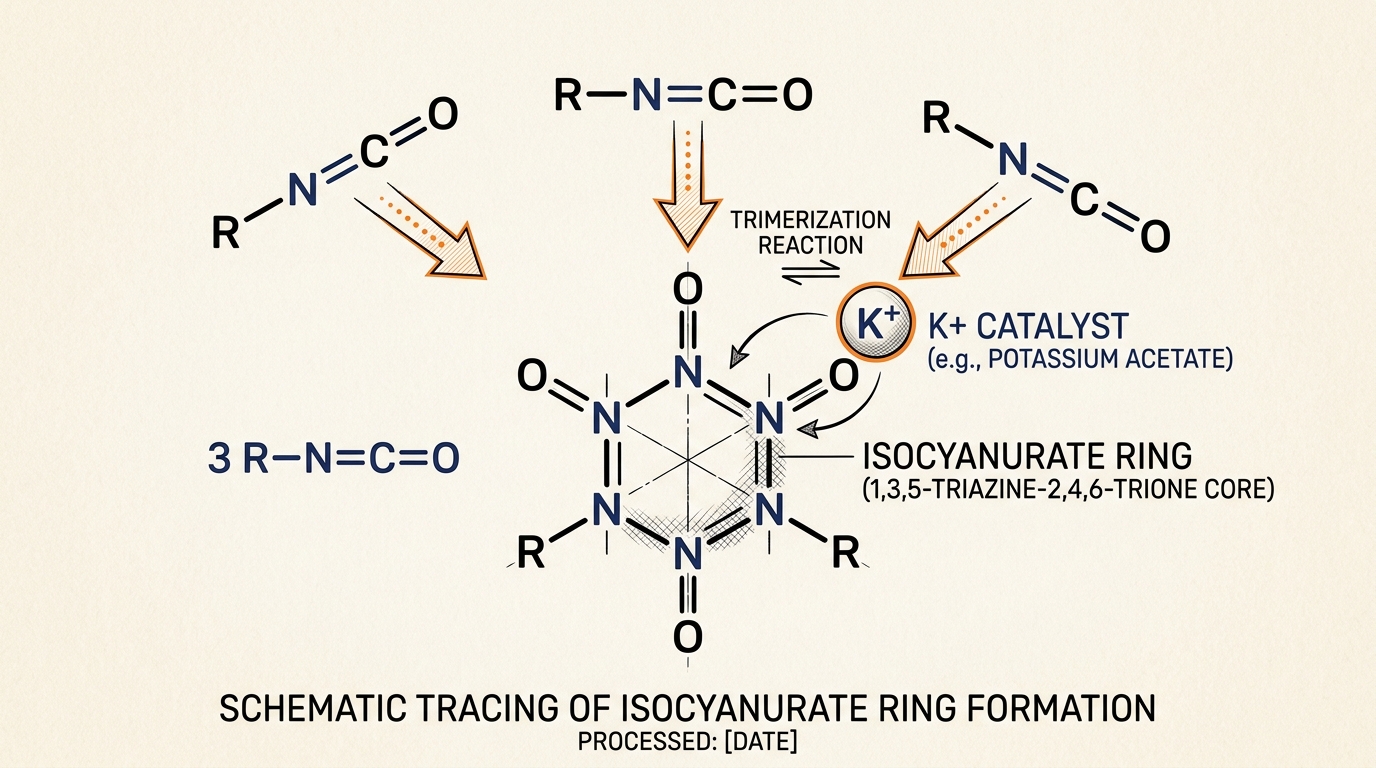
Это кольцо — структурное различие между полиизоциануратным пенопластом и обычным полиуретаном. Изоциануратная сетка обугливается вместо плавления, что обеспечивает тепловые и огневые характеристики PIR.
Как работает реакция тримеризации
Карбоксилат калия действует как основание. Он активирует изоцианатную группу, образуется промежуточное соединение, циклизация замыкает изоциануратное кольцо, и катализатор регенерируется для следующего цикла.
Сообщаемые лабораторные загрузки составляют около 3,2 п.ч. на 100 ч. при изоцианатном индексе около 500, в изученном диапазоне примерно от 0,5 до 6 п.ч. на 100 ч. Сообщается, что повышение катализатора тримеризации сокращает время крема, гелеобразования и отлипа, повышает содержание изоцианурата и снижает теплопроводность.
По сравнению с аминным катализатором тримеризации, октаноат — более медленный и мягкий вариант. Он дает более длительное время крема и гелеобразования и образует более крупные ячейки, но работает стабильнее и лучше переносит влагу.
Сравнение октаноата с аминными и ацетатными катализаторами
Аминные катализаторы в той же рецептуре выполняют другую работу. Они управляют реакциями гелеобразования (уретан) и вспенивания (вода-CO2), в то время как октаноат калия управляет тримеризацией, которая строит изоциануратное кольцо. Система PIR использует обе реакции при изоцианатном индексе значительно выше 100.
Там, где оловянный катализатор, такой как октаноат олова ускоряет уретановую реакцию гелеобразования, октаноат калия ускоряет образование кольца.
Октаноат калия также редко работает в одиночку. Его обычный партнер, ацетат калия, — не конкурент, а другая соль тримеризации в смеси, настраиваемая по соотношению, а не заменяемая.
| Характеристика | Октаноат калия | Ацетат калия |
|---|---|---|
| Носитель | Диэтиленгликоль | Смешиваемый с водой гликоль или спирт |
| Добавлен цвет | Желто-оранжевый | Ниже |
| Начало образования кольца | Мягче, медленнее | Более высокая эффективность (сообщается) |
Смешивание позволяет производителю настраивать реакционную способность между более поздним началом октаноата и более быстрым образованием кольца ацетата, не затрагивая ничего остального в системе. Замена одного на другое в работающей рецептуре меняет носитель и цветовую нагрузку одновременно, поэтому перед этим перепроверьте профиль отверждения.
Как производят октаноат калия и почему его поставляют в ДЭГ
Октаноат калия получают нейтрализацией 2-этилгексановой кислоты калиевым основанием, затем разбавляют соль в носителе — диэтиленгликоле (ДЭГ) — для использования в качестве катализатора. Основная реакция — простая кислотно-основная нейтрализация: 2-этилгексановая кислота плюс гидроксид калия дает 2-этилгексаноат калия и воду.
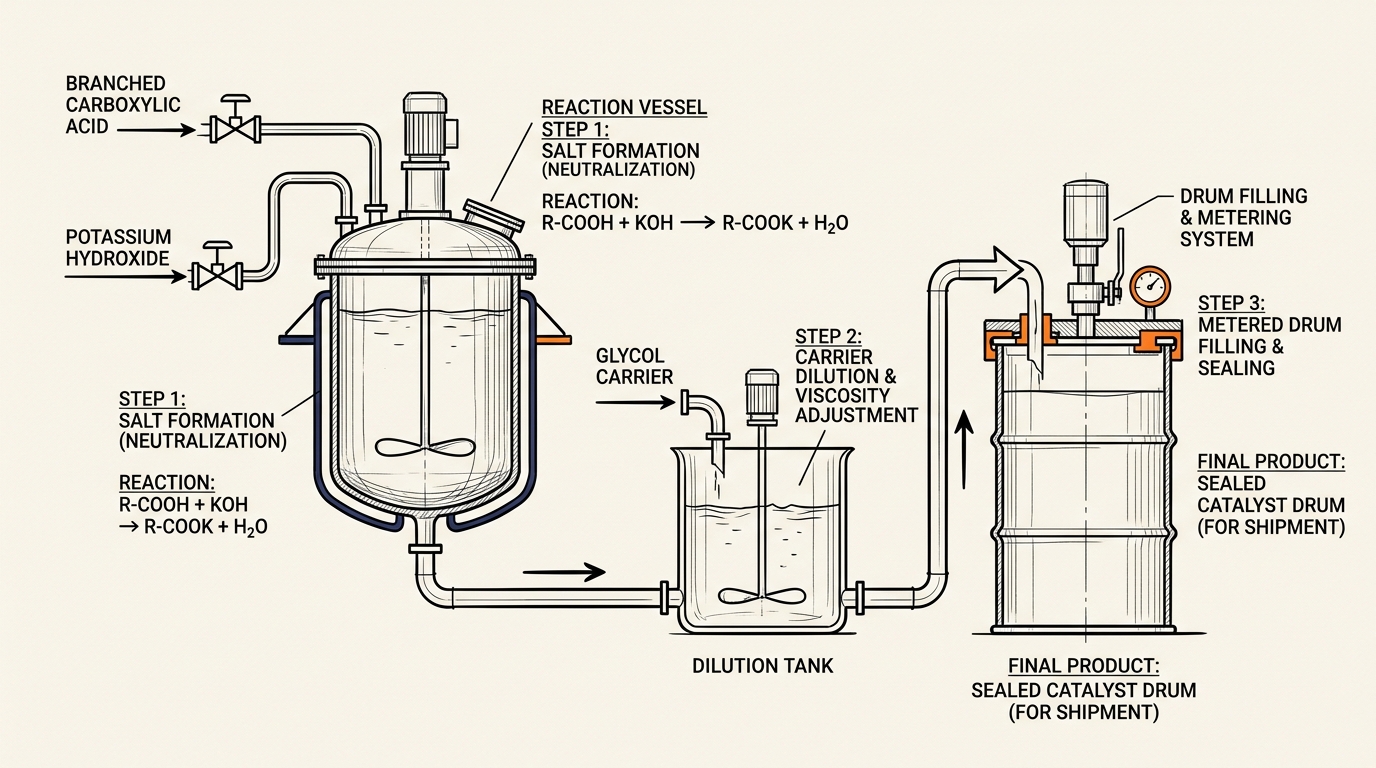
Справочные методики описывают добавление примерно 50% водного KOH к кислоте в течение около двух часов, позволяя экзотермической реакции подняться от комнатной температуры до почти 45 C при охлаждении. Готовый раствор содержит около 1% воды.
Сырье — это якорь всего маршрута. Его можно закупать по 2-этилгексановой кислоте (CAS 149-57-5), — той же разветвленной C8-кислоте, которая стоит за каждым октаноатом металла.
Чистый октаноат калия — это твердое вещество, а твердое вещество — плохой способ дозировать катализатор. Растворение его в концентрированный раствор в диэтиленгликоле дает перекачиваемую, не содержащую пыли жидкость, которая равномерно распределяется в полиольной стороне и дозируется по спецификации.
Носитель — не инертный фон в расчетах дозировки. Он составляет большую часть того, что находится в бочке.
Как читать маркировку сорта октаноата калия
Процент на маркировке сорта октаноата калия — это металлический калий по весу, а не количество соли катализатора в бочке. Сорт, продаваемый как 15% K в ДЭГ, содержит около 70% фактического 2-этилгексаноата калия по весу; 15% учитывает только атомы калия.
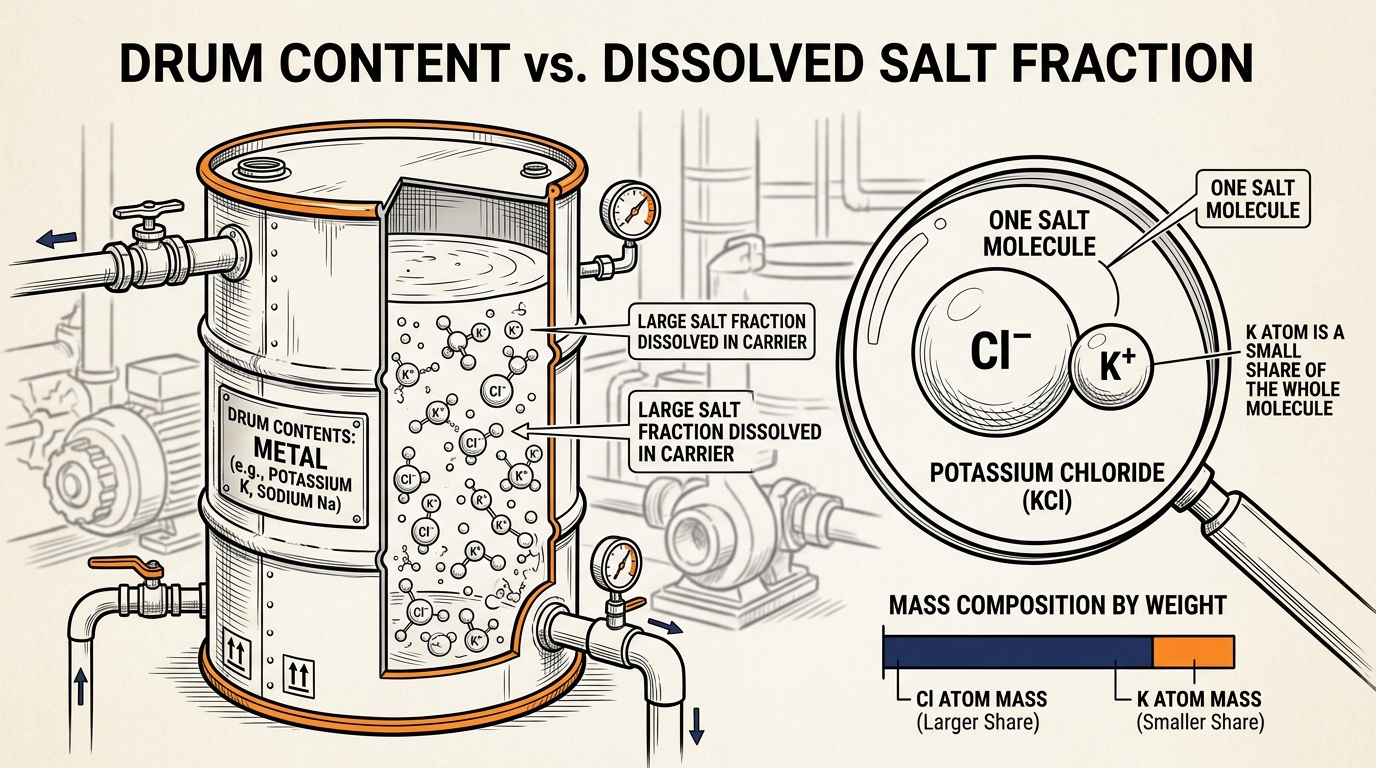
Арифметика за этим фиксирована. Чистый 2-этилгексаноат калия содержит только 21,4% калия по весу, потому что масса 39,1 атома калия — это небольшая доля молярной массы 182,3. Раствор с содержанием 15% калия, следовательно, несет около 70% соли, остальное — носитель ДЭГ.
Umicore указывает для своего сорта VALIREX K 15 DEG концентрацию 71 мас.%, а литература по PIR описывает коммерческий октаноат как примерно 70% раствор в диэтиленгликоле. Расчетная цифра и данные из технического паспорта совпадают.
| Марка | K металл | Носитель | Вязкость | Вода |
|---|---|---|---|---|
| VALIREX K 15 DEG (Umicore) | 15% | ДЭГ | ~5000 мПа·с, при комн. темп. | 4% |
| 15% Potassium Hex-Cem (Borchers) | 14.9-15.2% | ДЭГ | 3000-6000 мПа·с, 20 C | 3.0-4.5% |
Оба бренда указывают одинаковые 15% K в сорте DEG, но по разным стандартам испытаний, поэтому их диапазоны вязкости не совпадают.
Для дозирования ключевой цифрой является содержание соли 70%. Рассчитывайте катализатор по содержанию калия 2-этилгексаноата, и смена сорта, сохраняющая 15% K при изменении носителя или спецификации по воде, не станет неожиданностью для вашего времени гелеобразования.
Остерегайтесь таблиц поставщиков, указывающих 18–22% активного калия. Они описывают сорт по содержанию соли, а не паспортные данные по содержанию металла 15%, и смешение этих двух подходов — именно то, из-за чего ошибаются в дозировке. Число из COA, по которому вы рассчитываете дозу, — это содержание соли, а не содержание металла, указанное на барабане.
Где используется октоат калия помимо PIR-пены
Октоат калия выполняет две роли вне PIR-пены. Он работает как соускоритель в гелькоутах на основе ненасыщенных полиэфиров и как компонент ингибитора коррозии в некоторых пакетах охлаждающих жидкостей.
Соускоритель в полиэфирных гелькоутах
В ненасыщенных полиэфирных смолах и гелькоутах октоат калия работает как со-катализатор, который усиливает действие кобальта и снижает цвет, который приобретает отверждённый композит. Он позволяет октоату кобальта достигать того же отверждения при более низком содержании кобальта. Кобальт в таких системах обычно составляет 0,005–0,020% в пересчёте на металл.
Параллельно с этой ролью идёт тенденция к реформатуляции. Umicore теперь предлагает сорта калия без 2-EHA, линейку VALIKAT K, выпущенную для решения проблем токсичности 2-этилгексановой кислоты и её солей металлов, сохраняя при этом ту же функцию усиления кобальта и снижения цвета.
Ингибитор коррозии в охлаждающих жидкостях
Калия 2-этилгексаноат также присутствует в некоторых составах антифризов и охлаждающих жидкостей как ингибитор коррозии, где карбоксилат защищает поверхности металлов, а не катализирует реакцию. Эта роль химически не связана с тримеризацией и не должна влиять на выбор сорта для PIR-пены.
Что это значит для вашей рецептуры
Покупайте октоат калия по двум цифрам, а не по одной. CAS 3164-85-0 подтверждает, что у вас разветвлённый 2-этилгексаноат, который действительно катализирует тримеризацию, а содержание соли, стоящее за содержанием металла, — это то, на что опирается ваша дозировка.
Тримеризация — это единственная причина, по которой существует этот барабан. Изоциануратное кольцо, которое он строит, — это то, что даёт PIR его обугливание и огнестойкость, а носитель DEG, маркировка 15% и пересечение с гелькоутами — всё это следствие одной этой реакции.
Прочитайте сорт правильно — и октоат калия перестанет быть загадочной жидкостью. Он станет спецификацией, которую вы можете квалифицировать, заменять и защищать.