

Цирконий октоат 18, олово(II) октоат T9, калий октоат 15 в ДЭГ: три этикетки из трёх отраслей, одна исходная кислота. Каждый коммерческий октоат металла — это соль 2-этилгексановой кислоты (2-ЭГК, CAS 149-57-5), несущая другой металл.
Кислота обеспечивает растворимость в углеводородах и удобство обращения с жидкостью. Металл определяет, какую реакцию ведёт соль: кобальт и марганец разлагают гидропероксиды для высыхания алкидных красок, олово и висмут ускоряют гелеобразование уретанов, калий строит изоциануратные кольца в пенополиизоцианурате (ПИР).
Выбор — это двухэтапная задача. Сопоставьте металл с реакцией, которая нужна вашей рецептуре, затем сравните марки по содержанию металла и носителю, потому что число на каждой этикетке октоата — это процент металла, а не чистота.
Октоаты металлов — это соли 2-этилгексановой кислоты
Октоаты металлов — это соли металлов и 2-этилгексановой кислоты, разветвлённой C8-карбоновой кислоты. «Октоат» — коммерческое сокращение; химические базы данных индексируют те же вещества как 2-этилгексаноаты. Одна кислота соединяется с кобальтом, марганцем, цирконием, кальцием, цинком, оловом, калием, висмутом, медью и другими металлами, давая соли, продаваемые как сиккативы, катализаторы и стабилизаторы.
Разветвление несёт практическую ценность. 2-этильная боковая цепь на C8-основе удерживает эти соли растворёнными в уайт-спирите, углеводородах и пластификаторах, поэтому металл поставляется как жидкий концентрат, который можно переливать, а не как нерастворимое мыло.
Исходная кислота 2-этилгексановая кислота сама по себе является крупнотоннажным промышленным химикатом, питающим присадки к охлаждающим жидкостям и эфирные пластификаторы наряду с этими солями.
Октоат против октаноата
Октоат и октаноат называют соли двух разных кислот. Коммерческий октоат означает 2-этилгексаноат, от разветвлённой кислоты; октаноат — это, строго, соль линейной н-октановой кислоты. Обе — C8, поэтому этикетки путают, и поэтому олово(II) октоат до сих пор ошибочно фигурирует как октаноат олова(II) в химической литературе.
Медь показывает последствия для закупок. Октаноат меди, зарегистрированный EPA как фунгицид в 1997 году, — это медное мыло на линейной кислоте, CAS 20543-04-8. Промышленный октоат меди — это 2-этилгексаноат меди, CAS 149-11-1, другое вещество, которое появляется в марках меди 6%, указанных поставщиками, как фунгицид для покрытий по дереву.
Проверяйте по номеру CAS, а не по названию, всякий раз, когда октоат попадает к вам на стол. Совпадение названия может дать не ту молекулу; совпадение CAS — не может.
Как октоаты металлов производят из 2-этилгексановой кислоты
Два типа маршрутов охватывают почти все коммерческие октоаты металлов: прямая реакция кислоты с оксидом, гидроксидом или карбонатом металла и двойное разложение через натриевую соль и хлорид металла. Оба потребляют промышленную 2-этилгексановую кислоту как единственное органическое сырьё, поэтому производители солей проверяют поступающую кислоту на чистоту и цвет прежде всего.
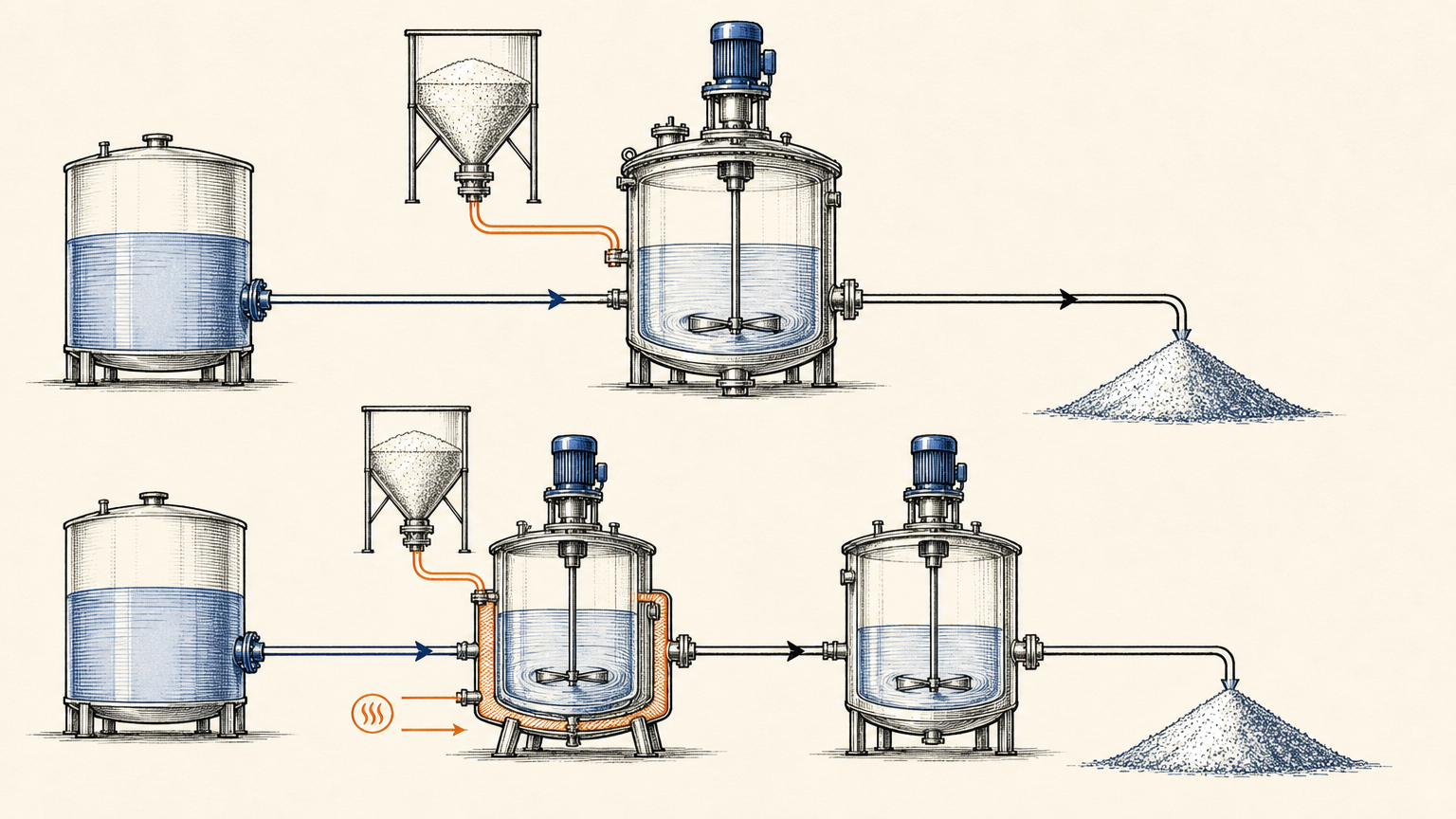
Прямая реакция
Прямой маршрут — это одна нейтрализация: кислота плюс оксид, гидроксид или карбонат металла, с водой как побочным продуктом. Олово(II) октоат образуется так из оксида олова(II) и 2-ЭГК.
Сама кислота получается на один шаг ниже по потоку от оксо-процесса, через свой собственный производственного маршрута из пропилена через н-масляный альдегид.
Двойное разложение
Двойное разложение идёт в два этапа. Кислоту сначала нейтрализуют гидроксидом натрия, получая 2-этилгексаноат натрия; затем эта соль реагирует с хлоридом металла в нагретом инертном растворителе, заменяя натрий на целевой металл.
Хлорид олова(II) — задокументированный пример для олова. Оба названных здесь примера — химия олова, но два типа маршрутов повторяются по всему семейству с изменением только источника металла.
Натриевая соль
2-этилгексаноат натрия (CAS 19766-89-3) — единственный щелочной член, который поставляется как продукт, а не только как реагент. Этап двойного разложения выше производит его в объёме, и затем он выполняет две роли, которые металлы-сиккативы и катализаторы никогда не выполняют.
В промышленных жидкостях соли натрия и калия ингибируют коррозию в органических кислотных охлаждающих жидкостях для двигателей и смазочно-охлаждающих жидкостях.
Натрий и калий — щелочные металлы, а не сиккативы или катализаторы, поэтому соль относится к производственной химии, а не к разделам о покрытиях или пенопластах.
Сиккативные октоаты для красок и покрытий
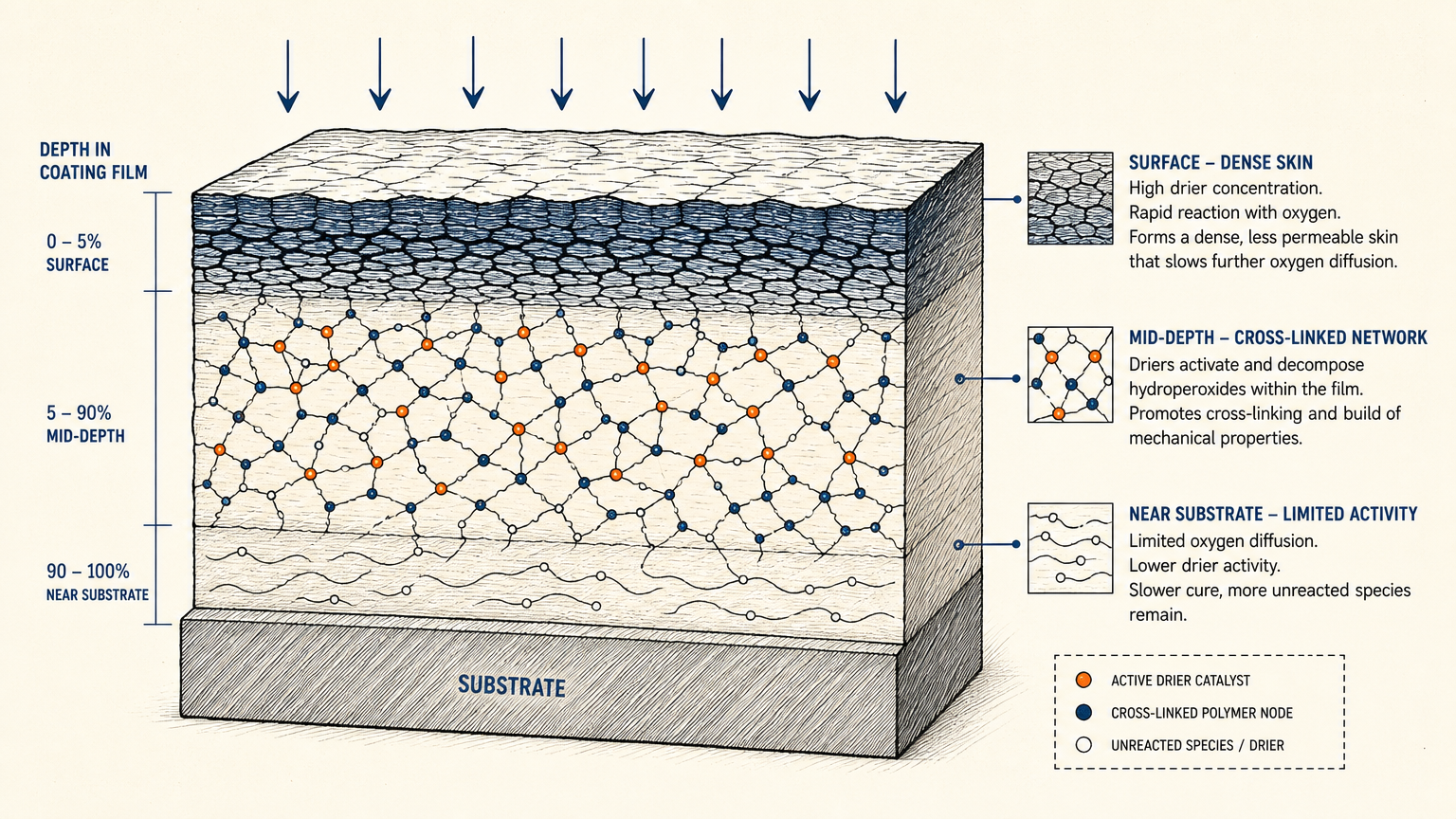
Сиккативные октоаты делятся на три рабочие группы, каждая связана с разной задачей внутри окислительно высыхающей плёнки.
| Группа сиккатива | Металлы | Функция в плёнке |
|---|---|---|
| Основные | Co, Mn, Ce | Разложение гидропероксидов, поверхностное высыхание |
| Сквозные | Zr, Li | Сшивание по глубине плёнки |
| Вспомогательные | Ca, Zn, Ba | Поддержка основных, смачивание пигментов, твёрдость и глянец |
Октоат кобальта (CAS 136-52-7) до сих пор является эталонным основным сиккативом. Типичная дозировка составляет 0,05–0,4% на твёрдое вещество связующего, и та же соль десятилетиями служит ускорителем в паре с МЭКП-пероксидом в холодноотверждаемых ненасыщенных полиэфирных системах.
Марганец — рабочая альтернатива там, где кобальт выводят из рецептур. Хироаки Накано из DIC сообщил в PCI Magazine что его марганцевый сиккатив с ускорением лигандом, DICNATE MV130A, достиг полного высыхания за 6,3 часа при 0,01% марганца на связующее, против 11,3 часов для обычной кобальтовой смеси.
DICNATE MV130A — это неодеканоат, а не октоат, что делает его доказательством трендов без кобальта и без октоатов одновременно.
Паритет зависит от рецептуры. Обзоры в Coatings World и PCI около 2016 года отметили подвох: простые карбоксилаты марганца нуждаются в хелатирующих ускорителях, чтобы приблизиться к активности кобальта, и эти комплексы могут сдвигать цвет в светлых тонах.
Цирконий заслуживает своё место сквозного сиккатива на алкидах с высоким содержанием гидроксильных групп, где он наиболее активен. Октоаты кальция и цинка находятся во вспомогательной группе; оба также появляются как химия термостабилизаторов в ПВХ, отдельная роль поглотителей кислот вне покрытий.
Октоат свинца сохраняется только как историческое примечание. Старые системы полагались на него там, где плёнки должны были высыхать ниже примерно 10 °C, и ограничения на свинец вытеснили его из потребительских покрытий.
Не заменяйте один октоат металла другим без повторной квалификации механизма, который он на самом деле запускает. Циркониевая добавка не спасёт плёнку, потерявшую свой катализатор поверхностного высыхания.
Катализаторные октоаты для полиуретановых, PIR и полиэфирных систем
Катализаторные октоаты ускоряют реакции присоединения и циклообразования вместо окисления. Олово управляет гелеобразованием полиуретана, калий управляет тримеризацией изоцианурата, а висмут покрывает роль олова в бесоловянных полиуретановых системах.
Октоат олова (T9)
Октоат олова, 2-этилгексаноат олова(II) (CAS 301-10-0), является катализатором гелеобразования для гибкого полиэфирного пенополиуретана, и коммерческая марка содержит примерно 28% олова. Та же соль инициирует полимеризацию с раскрытием цикла лактида для полимолочной кислоты и отверждает силиконовый каучук комнатного отверждения.
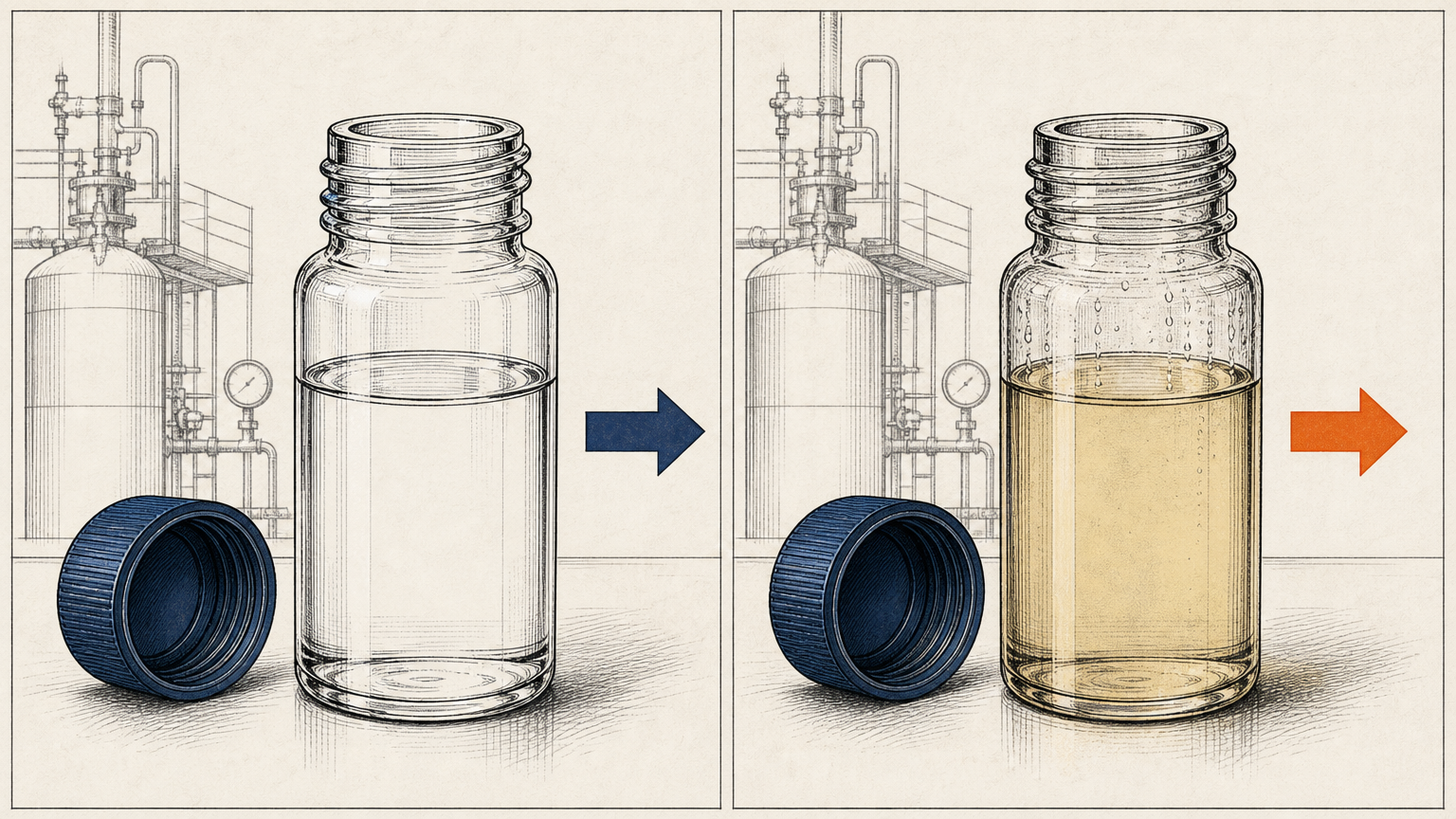
T9 также является самым хрупким членом семейства. Соль гидролизуется при контакте с водой и окисляется от Sn(II) к Sn(IV), поэтому она не может находиться в полиольных премиксах, содержащих воду, а состаренный материал часто желтеет. Когда линия пенопласта гелеет медленно, я сначала проверяю дозировку T9 и состояние T9.
Октоат калия
Октоат калия управляет тримеризацией, которая создаёт изоциануратные кольца в PIR-плитах и жёстком напыляемом пенопласте. Ион калия стабилизирует переходное состояние тримеризации и снижает энергию активации для образования кольца, что и обеспечивает PIR его термическую стабильность.
Марки поставляются в виде растворов: линейка Hex-Cem от Milliken содержит 15% калия, а Umicore указывает VALIREX K 15 в диэтиленгликоле. Та же спецификация добавляет вторую роль — совместное ускорение кобальта в ненасыщенных полиэфирных гелькоутах для снижения дозировки кобальта и цвета.
Октоат висмута
2-этилгексаноат висмута (CAS 67874-71-9) является ведущим кандидатом везде, где олово должно покинуть полиуретановую формулу. Shepherd позиционирует свои катализаторы BiCAT против химии олова, свинца и ртути в 1K и 2K системах и разместил их в напыляемом пенопласте с HFO-вспениванием, при этом скорость реакции масштабируется пропорционально концентрации висмута.
Читайте здесь и кислоту, и металл. Сам BiCAT 8106 — это карбоксилат висмута C10 с содержанием 20%, а не октоат, и заявления об отсутствии побочных реакций — это позиционирование производителя: висмут всё ещё требует квалификации в вашей собственной системе с водяным вспениванием.
Как читать этикетку марки октоата
Этикетка октоата кодирует три вещи: металл, содержание металла в процентах по весу и носитель. Cobalt 10 D60 — это 10% кобальта в деароматизированном углеводороде; zirconium 18 — это 18% циркония в уайт-спирите; potassium 15 DEG — это 15% калия в диэтиленгликоле.
| Пример марки | Поставляемый металл | Носитель | Производитель |
|---|---|---|---|
| VALIREX Co 10 D60 | 10% Co | Деароматизированный углеводород | Umicore |
| Accelerator COB 6 | 6% Co | Раствор в растворителе | United Initiators |
| MORDRY Zirconium 18 | ~18% Zr | Уайт-спирит | Delta |
| VALIREX K 15 DEG | 15% K | Диэтиленгликоль | Umicore |
Процент — это металл, а не содержание соли и не чистота. Две бочки одинакового нетто-веса могут нести очень разное количество активного металла, поэтому сравнения по котировкам должны основываться на стоимости за килограмм поставляемого металла.
Совместимость носителя — это второе чтение. Диэтиленгликоль подходит для полиольных смесей PIR, уайт-спирит подходит для сольвентных алкидов, а пластификаторные носители принадлежат только системам, которые их переносят; правильный металл в неправильном носителе всё равно провалит партию.
Процент содержания металла на этикетке — это реальная спецификация. Всё остальное в сертификате анализа октоата является производным от этого числа.
Замена без кобальта, без олова и без октоата
Линейки продуктов без кобальта, без олова и без октоата все восходят к одному регуляторному драйверу: классификации ЕС 2-этилгексановой кислоты и её солей как репротоксиканта категории 1B (H360D) согласно CLP ATP 18.
Классификация действует с 3 мая 2022 года, стала юридически обязательной с 1 декабря 2023 года и заменила специфический предел концентрации 4,5% на общий порог 0,3% для смесей Repr. 1B.
Цифра 0,3% — это то, где её ощущают готовые продукты. FUCHS уведомил клиентов по охлаждающим жидкостям, что любой продукт, содержащий 0,3% или более 2-ЭГК или её солей, требовал переклассификации с этой даты. Та же арифметика применима к краске или пенопластовой системе, дозированной октоатным сиккативом или катализатором.
Классификация ничего не запрещает. Что она меняет — это стоимость маркировки для сохранения октоата в потребительском продукте, и эта экономика управляет тремя параллельными путями замены:
- Сиккативы без кобальта: марганцевые и железные системы, часто с лигандным ускорением, стремящиеся к поверхностному высыханию кобальта.
- Катализаторы без олова: карбоксилаты висмута, занимающие места T9 в полиуретановых системах.
- Карбоксилаты без октоата: целые линейки продуктов, перестроенные на неодекановую, изононановую или рицинолевую кислоту. Umicore ведёт этот путь с тех пор, как внесение 2-ЭГК в список Proposition 65 Калифорнии привлекло внимание в 2013 году.
Давление ложится неравномерно. Umicore указывает на ограничения для декоративных красок и пенопласта для постельных принадлежностей и мебели; промышленные покрытия и закрытые B2B-каналы движутся медленнее. Октоаты остаются экономически эффективным вариантом по умолчанию там, где готовый продукт остаётся ниже порога 0,3%.
Что большинство покупателей понимают неправильно
Повторяющаяся ошибка — покупка октоатов по названию и по цене за бочку. Совпадение названия может пересечь линию октоат-октаноат без чьего-либо внимания, а сравнение цен за бочку скрывает, что процент на этикетке — это поставляемый металл. Проверки, которые защищают покупку, — это номер CAS и стоимость за килограмм металла в носителе, который принимает ваша система.
Более глубокая привычка — выбор, основанный на механизме. Кобальтовый сиккатив, оловянный катализатор гелеобразования и калиевый катализатор тримеризации — это не вариации одного продукта; это три разные реакции, носящие одну и ту же кислоту. Сертификат анализа даёт вам четыре числа; спецификация даёт вам окно; применение говорит вам, какой угол окна вам на самом деле нужен.
Регуляторная сторона важна коммерчески по той же причине: порог маркировки 0,3% на общую кислоту затрагивает все ветви семейства одновременно. План замены стоит написать для всего вашего списка октоатов, а не для одного продукта за раз.