

_Por qué la longitud de la cadena lateral influye mucho más que en la retención del asentamiento_
Pocas variables estructurales reciben tanta atención por parte de los ingenieros de formulación como la longitud de la cadena lateral de poliéter. La misma pregunta surge en laboratorios de investigación, instalaciones de producción de polímeros y reuniones técnicas con productores de hormigón: ¿cómo influye la longitud de la cadena lateral en el rendimiento de un superplastificante de policarboxilato?
La pregunta es simple. La respuesta no lo es.
La longitud de la cadena lateral afecta la geometría del polímero, la adsorción sobre las partículas de cemento, el espesor de la barrera estérica, el comportamiento de polimerización, la viscosidad de la solución y la robustez de fabricación. Por ello, los formuladores experimentados rara vez la tratan como un parámetro de diseño aislado, sino como un componente dentro de una arquitectura molecular más amplia.
Maximizar la longitud de la cadena lateral es el objetivo equivocado. Lo que importa es el ajuste entre la estructura del polímero y el rendimiento de ingeniería que necesitas.
¿Una cadena lateral más larga mejora siempre la dispersión?
Aumentar la longitud de las cadenas laterales de poliéter a menudo mejora la estabilización estérica. Las cadenas más largas se extienden más en la solución de poros y aumentan la distancia física entre partículas de cemento vecinas, lo que, en las condiciones adecuadas, mejora la dispersión de partículas y mantiene la trabajabilidad durante tiempos de transporte o colocación más largos.
Sin embargo, el diseño molecular rara vez sigue una relación lineal. Las cadenas laterales más largas traen sus propias consecuencias.
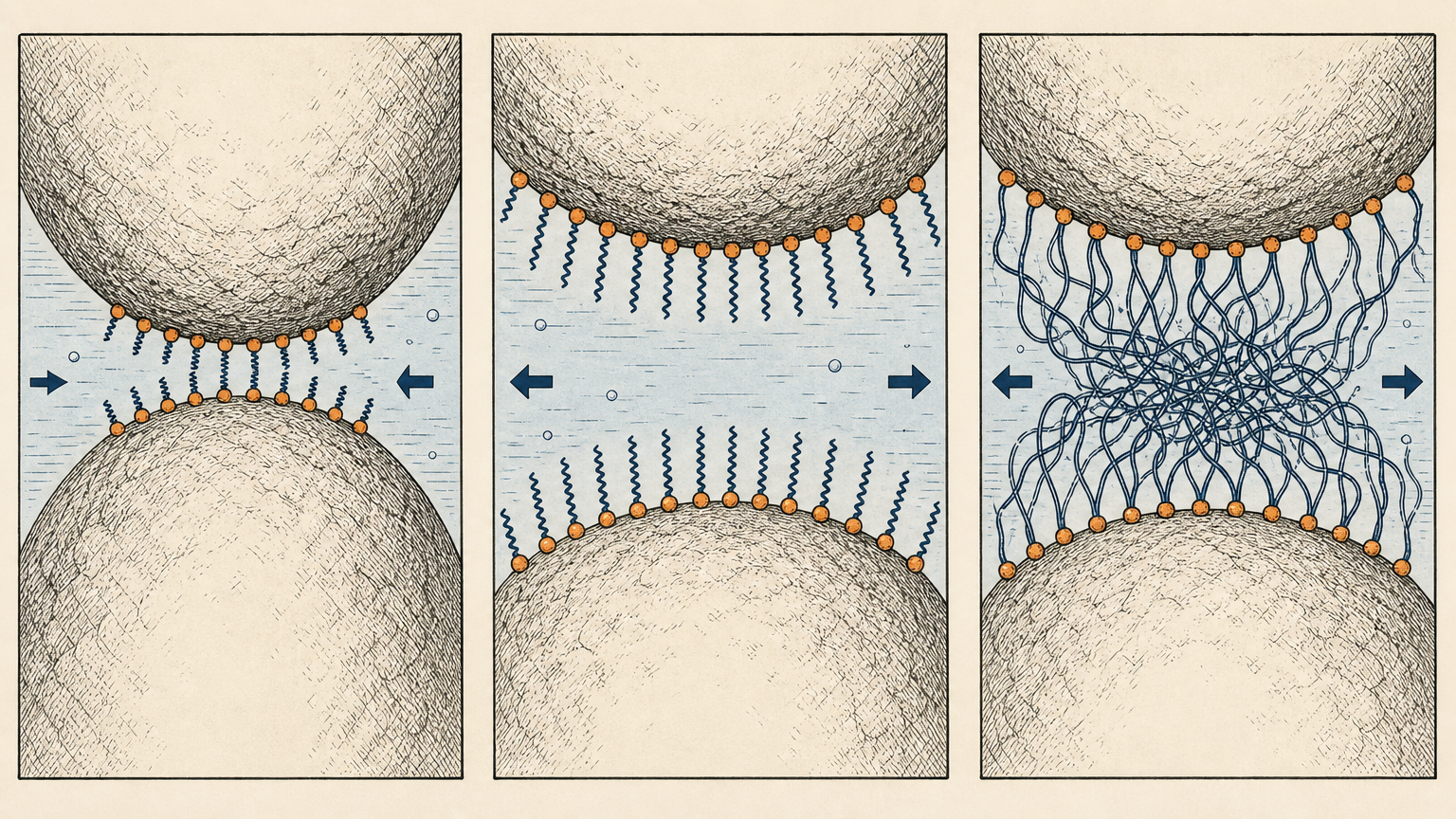
La viscosidad de la solución puede aumentar a medida que crece el tamaño molecular, y el comportamiento de polimerización puede cambiar con ello. La cinética de reacción se vuelve más sensible a las condiciones del proceso, y el equilibrio entre la densidad del esqueleto y el espaciado de las cadenas laterales se desplaza junto con ellas.
Estas interacciones son la razón por la que extender las cadenas laterales indefinidamente no produce mejoras ilimitadas en el rendimiento del hormigón. La optimización en ingeniería significa equilibrar ventajas competitivas en lugar de perseguir un único máximo.
Qué cambia cuando las cadenas laterales se alargan
Trabajos en HPEG 2400 y plataformas relacionadas en una gama de tamaños moleculares muestran que la longitud de la cadena lateral impulsa más que la dispersión del cemento. También mueve la conformación del polímero, la eficiencia de adsorción y la distribución de peso molecular después de la polimerización.
Dentro de los rangos investigados, las cadenas laterales más largas mejoraron con frecuencia la estabilización estérica y la retención del asentamiento. Los investigadores también registraron cambios en las propiedades de la solución del polímero y en el comportamiento de reacción que obligaron a ajustes correspondientes en las condiciones de síntesis.
De esto surge un principio. Un cambio en la estructura del macromonómero no es la sustitución de una materia prima por otra; es un rediseño del sistema de polimerización. Por lo tanto, la implementación industrial depende de optimizar todo el proceso de síntesis en lugar de sustituir componentes individuales.
Cómo interactúan la longitud de la cadena lateral y la densidad de injerto
Un huerto densamente plantado es una forma útil de visualizar el diseño de las cadenas laterales. Los árboles demasiado pequeños dejan grandes huecos entre ramas vecinas, y los árboles que crecen demasiado grandes y apiñados interfieren entre sí.
El objetivo no son los árboles más grandes posibles. Es la organización espacial más efectiva del dosel.
Los superplastificantes de policarboxilato se comportan de manera muy similar. El esqueleto del polímero proporciona puntos de anclaje en la superficie del cemento, mientras que las cadenas laterales de poliéter se proyectan hacia afuera y forman una capa protectora tridimensional.
Varias variables interactuantes determinan qué tan bien funciona esa capa:
- Longitud de la cadena lateral
- Densidad de injerto
- Flexibilidad del esqueleto
- Distribución de peso molecular
- Disposición espacial después de la adsorción
Cambiar un parámetro inevitablemente mueve a los demás, por lo que la arquitectura molecular debe evaluarse como un sistema integrado en lugar de una colección de especificaciones independientes.
Qué plataforma de macromonómero se adapta a hormigón premezclado, prefabricado y SCC
Las aplicaciones de hormigón imponen diferentes demandas al diseño molecular. Un productor de premezclado que mueve hormigón a través de tráfico urbano congestionado puede priorizar la retención del asentamiento a largo plazo, mientras que un fabricante de prefabricados con ciclos de producción cortos enfatiza el desarrollo rápido de resistencia y el rendimiento en su lugar.
El hormigón autocompactante necesita un equilibrio entre fluidez y resistencia a la segregación. El hormigón de ultra alto rendimiento exige un control estricto sobre la dispersión de partículas.
Esos objetivos diferentes son la razón por la que los productores de PCE mantienen múltiples plataformas de productos en lugar de una formulación universal. Una EPEG 3000 o TPEG 2400 plataforma se adapta a una arquitectura diferente que una de HPEG.
Qué cuestan las cadenas laterales más largas en producción
Las discusiones de laboratorio sobre la longitud de la cadena lateral generalmente se detienen en el rendimiento del hormigón. Los fabricantes industriales llevan factores adicionales.
Las cadenas de poliéter más largas pueden influir en:
- Eficiencia de mezclado durante la polimerización
- Características de transferencia de calor
- Tiempo de reacción
- Viscosidad del producto durante el almacenamiento
- Bombeabilidad
- Eficiencia de filtración
- Empaque y transporte
Ninguno de estos determina la reducción de agua directamente. Cada uno influye en el costo de fabricación, la estabilidad de producción y la confiabilidad comercial.
Un ajuste molecular menor puede, por lo tanto, tener consecuencias operativas mucho antes de que el aditivo terminado llegue a una planta de dosificación. La ingeniería de procesos industriales tiene que tener en cuenta todo eso; la optimización de laboratorio no.
Caso de estudio: un macromonómero de cadena más larga que ralentizó el reactor
Un productor que desarrollaba un superplastificante de policarboxilato premium para aplicaciones de premezclado metropolitano se propuso mejorar la retención del asentamiento en tiempos de transporte superiores a dos horas.
Los ensayos iniciales de laboratorio con un macromonómero de cadena más larga alcanzaron el perfil de trabajabilidad objetivo. Una vez que comenzó la producción piloto, los ingenieros midieron una mayor viscosidad de la solución y una disipación de calor más lenta dentro del reactor, lo que redujo la eficiencia de producción.
El equipo de desarrollo mantuvo la nueva plataforma molecular y cambió el proceso a su alrededor. Ajustaron la secuencia de polimerización, optimizaron la concentración de sólidos y refinaron el control del proceso. El proceso de fabricación revisado mantuvo el rendimiento mejorado del asentamiento y restauró la producción comercial estable.
La lección es una que se repite en toda la industria. Los cambios en la arquitectura molecular generalmente requieren cambios correspondientes en la estrategia de fabricación.
Por qué los formuladores eligen la consistencia sobre la reducción máxima de agua
Las organizaciones de formulación maduras tienden a preferir la robustez sobre la excelencia aislada de laboratorio.
En lugar de preguntar qué longitud de cadena lateral produce la mayor reducción de agua en condiciones ideales, los ingenieros experimentados preguntan qué arquitectura molecular sigue funcionando con diferentes cementos, estaciones, campañas de producción y aplicaciones de clientes.
La distinción importa comercialmente, porque el éxito comercial depende de la repetibilidad. Un polímero que sacrifica algo de rendimiento máximo por una mayor consistencia a menudo vale más durante la vida de un producto que uno que necesita una ventana operativa estrecha para funcionar en absoluto.
Cómo la Longitud de la Cadena Lateral Alcanza el Concreto Fresco
La longitud de la cadena lateral influye en el concreto fresco indirectamente, a través de una cadena de cuatro pasos.
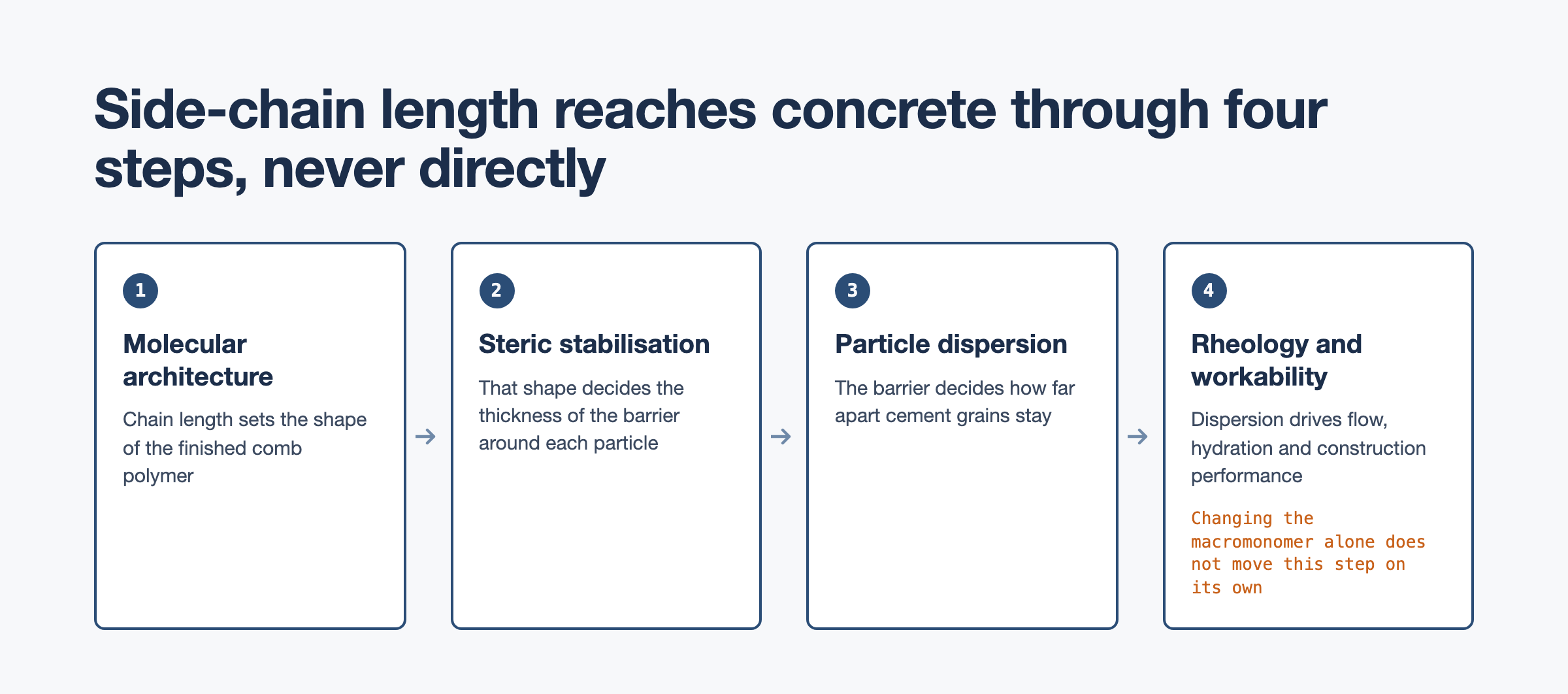
Primero da forma a la arquitectura molecular del polímero, y esa arquitectura determina la estabilización estérica. La estabilización estérica luego impulsa la dispersión de partículas, lo que afecta la reología, la trabajabilidad, la hidratación y el rendimiento en la construcción.
Cada paso depende del anterior, por lo que cambiar solo el macromonómero rara vez garantiza mejores propiedades del concreto. Toda la formulación debe moverse junta: estrategia de polimerización, compatibilidad con el cemento, dosificación y control de producción.
Qué Significa Esto Cuando Cambias la Longitud de la Cadena Lateral
Trata un cambio en la longitud de la cadena lateral como una reformulación, no como una sustitución. Las condiciones del reactor, la concentración de sólidos y el perfil de alimentación que se adaptaban al macromonómero anterior no se adaptarán automáticamente al nuevo.
Prueba el cambio donde realmente cuesta dinero. La viscosidad en almacenamiento, la disipación de calor durante la polimerización y la retención de asentamiento en tu tiempo de transporte real más largo te dirán más que una cifra de reducción de agua medida en condiciones de laboratorio.
El nombre del grado en la orden de compra establece las posibilidades estructurales. Lo que haces en el reactor decide cuál de ellas obtiene el polímero terminado. La especificación detrás de un grado, cubierta en más detalle en qué es HPEG 2400 y cómo funcionan sus números, es donde comienza esa decisión.