How to Read a Resin Certificate of Analysis
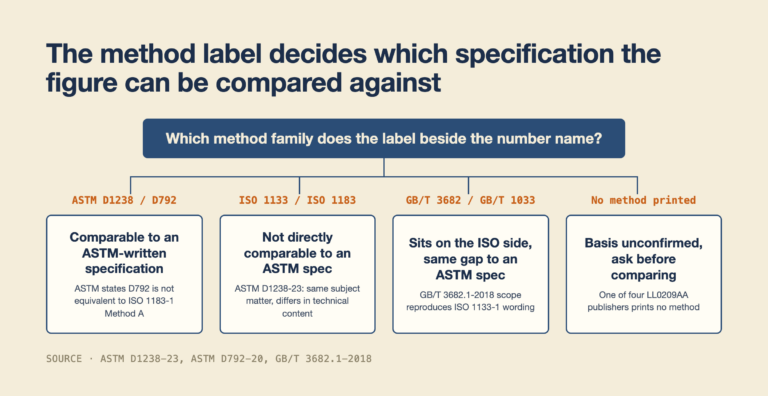
A melt flow rate of 0.9 g/10 min recorded under ISO 1133 and 0.9 g/10 min recorded under ASTM D1238 are not the same measurement, and ASTM says so in its own standard records. The method column on a lot…


A melt flow rate of 0.9 g/10 min recorded under ISO 1133 and 0.9 g/10 min recorded under ASTM D1238 are not the same measurement, and ASTM says so in its own standard records. The method column on a lot…
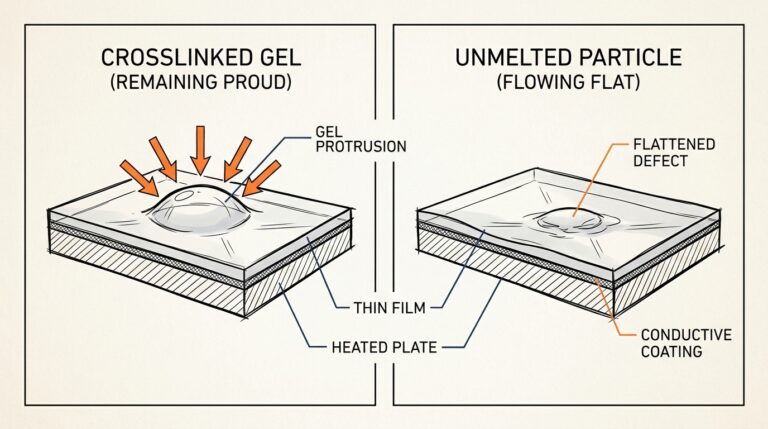
Two observations make a processor certain the new lot is at fault: the gels started when the lot started, and they sit everywhere across the web instead of in a line. That is also what a new resin looks like…
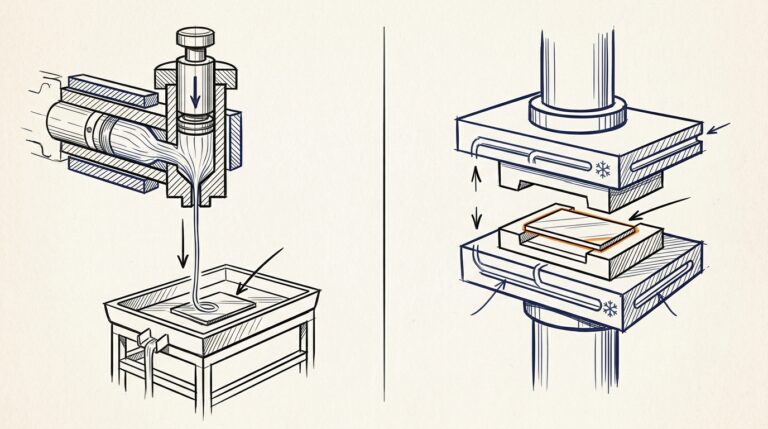
Four organisations publish a resin coded LL0209AA. Their own datasheets print 0.9 or 1.0 melt index, measure density by ISO 1183, ASTM D2839 or GB/T 1033, and quote film properties at 38 microns or at 0.030 mm. That gap sits…
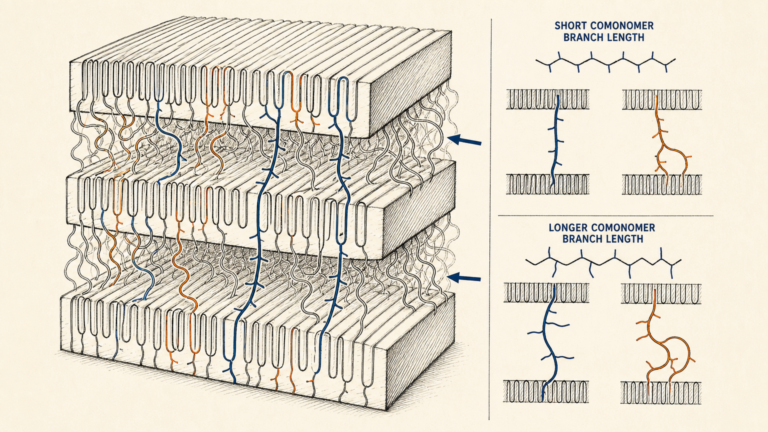
Blown-film LLDPE grades cluster between 0.5 and 1.1 g/10 min melt index. Cast-film grades sit between 2.0 and 3.5, and across the twenty film grades in Westlake’s September 2022 polyethylene portfolio guide the two bands never touch. I read a…
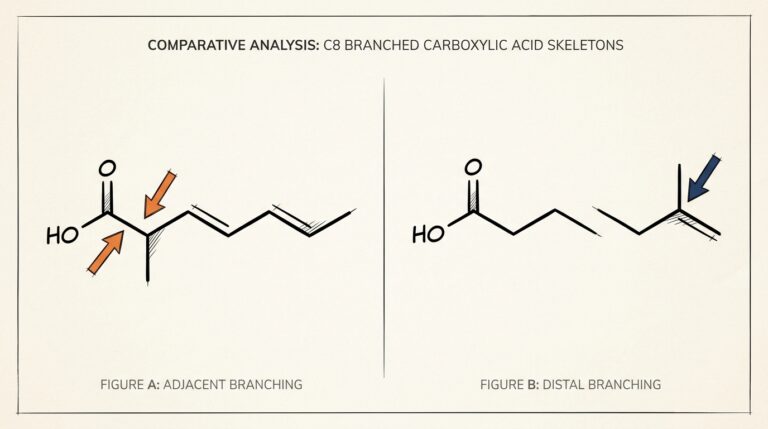
Look up “isooctanoic acid” and the sources contradict each other. PubChem files it as a separate compound from 2-ethylhexanoic acid, with a different structure and a different InChIKey. One supplier catalog ties the name to CAS 149-57-5, another to CAS…
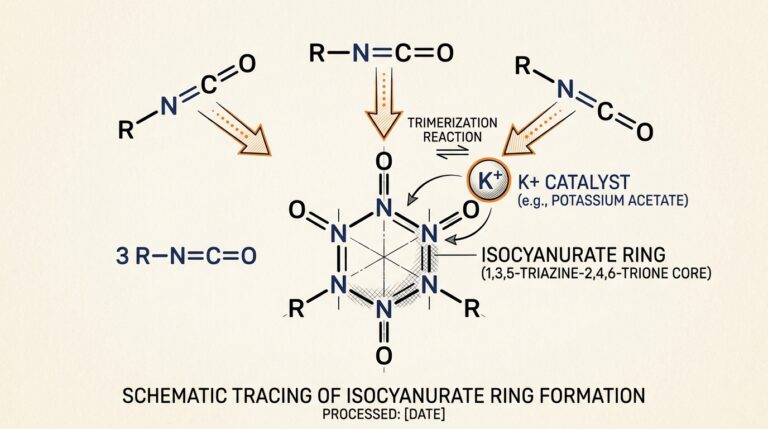
Two numbers on a drum of potassium octoate are both correct and look like they contradict each other. The label reads 15% potassium. The drum holds roughly 70% catalyst. The 15% is potassium metal by weight. The 70% is how…
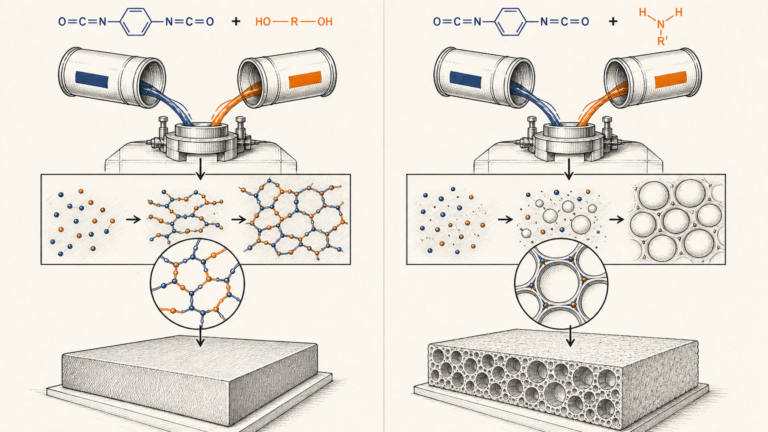
Stannous octoate, or tin(II) 2-ethylhexanoate, catalyzes three unrelated reactions from one molecule: polyurethane foam gelation, polylactic acid ring-opening, and RTV-2 silicone cure. For a formulator, the useful questions are narrower. Which route made the drum you just received, whether the…
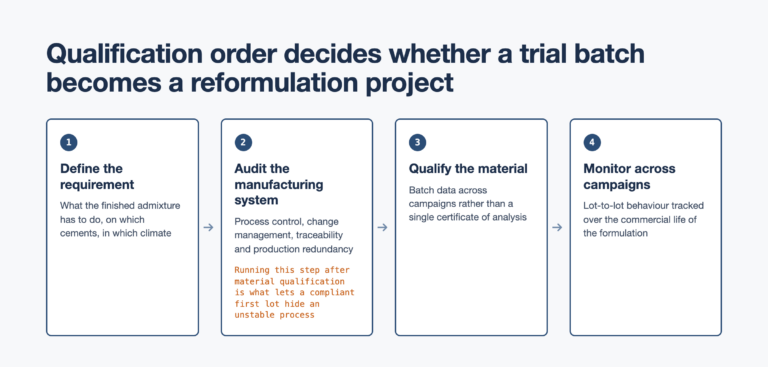
_Building a supply strategy that survives commercial production_ In most industries purchasing begins with a price quotation. In construction chemicals it begins earlier, with the question of whether a supplier can hold consistent production across the entire commercial life of…
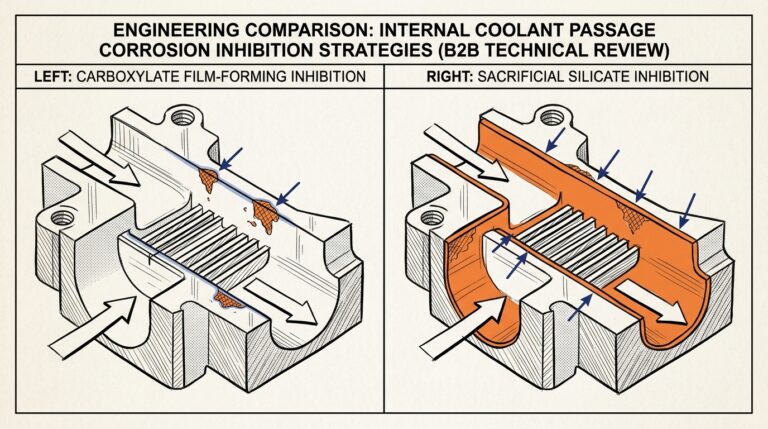
Two OAT concentrate disclosures sit on the same formulator’s desk: one lists potassium 2-ethylhexanoate, the other advertises itself as 2-EHA-free. That difference could reflect corrosion chemistry, elastomer risk, or labeling law, and each answer points at a different reformulation decision.…

_Industrial scale-up as an engineering discipline_ A successful laboratory formulation often creates a sense of confidence. The polymer exhibits excellent molecular characteristics. Water reduction exceeds expectations. Slump retention satisfies the original design objectives. Repeat laboratory batches produce encouraging results. At…