

Introduction
2-Ethylhexanoic Acid (2-EHA), CAS No. 149-57-5, is an important branched-chain carboxylic acid widely used in the chemical industry as a key intermediate for producing metal salts, lubricants, coatings, catalysts, plastic additives, and specialty chemicals.
2-Ethylhexanoic Acid has application including coatings, plastics, automotive, electronics, and chemical synthesis.
What is 2-Ethylhexanoic Acid (2-EHA)?
2-Ethylhexanoic Acid is a colorless to pale yellow liquid organic acid with the molecular formula:
Molecular Formula: C₈H₁₆O₂
CAS Number: 149-57-5
Typical Characteristics
| Items | Specification |
|---|---|
| Appearance | Clear and transparent oiled liquid |
| Density (20℃) | 0.905g/cm3~0.910g/cm3 |
| Acid Value (KOH mg/g) | ≥387 |
| Purity | ≥99.50% |
| Water content | ≤0.10% |
| Hazen (Pt-Co) | ≤10 |
Main Applications of 2-Ethylhexanoic Acid
1. Production of Metal 2-Ethylhexanoates
One of the largest applications of 2-Ethylhexanoic Acid is the production of metal salts, including:
- Cobalt 2-Ethylhexanoate
- Zinc 2-Ethylhexanoate
- Calcium 2-Ethylhexanoate
- Manganese 2-Ethylhexanoate
- Zirconium 2-Ethylhexanoate
- Copper 2-Ethylhexanoate
These metal carboxylates are widely used as:
- Paint driers
- Polymerization catalysts
- PVC heat stabilizers
- Adhesive additives
- Rubber processing aids
Because of the excellent solubility of 2-EHA-based metal salts, they offer superior processing performance compared with many traditional metal soaps.
2. Coatings and Paint Industry
The coatings industry is one of the most important downstream markets for 2-EHA.
Metal 2-ethylhexanoates are commonly used as siccatives (driers) in alkyd coatings to accelerate oxidation and curing.
Benefits include:
- Faster drying time
- Improved gloss
- Better weather resistance
- Enhanced coating durability
- Uniform film formation
These advantages make them suitable for architectural coatings, industrial paints, wood coatings, and protective finishes.
3. Lubricants and Greases
2-Ethylhexanoic Acid is also used in manufacturing high-performance lubricants.
Its derivatives provide:
- Excellent anti-wear properties
- Improved oxidation stability
- Better thermal resistance
- Longer lubricant service life
Applications include:
- Automotive lubricants
- Industrial oils
- Metalworking fluids
- High-temperature greases
4. Plastic Stabilizers
In the plastics industry, metal 2-ethylhexanoates are widely used as stabilizers for PVC and other polymers.
Their functions include:
- Preventing thermal degradation
- Improving processing stability
- Enhancing product durability
- Maintaining color stability during processing
These additives help manufacturers produce higher-quality plastic products with longer service life.
5. Chemical Intermediate
2-EHA is an important intermediate for synthesizing various specialty chemicals.
It is commonly used in the production of:
- Catalysts
- Organic metal compounds
- Surface treatment chemicals
- Resin additives
- Specialty esters
Its versatile reactivity makes it a valuable building block in modern chemical manufacturing.
6. Residue Hydroprocessing Catalyst Precursors
Another important industrial application of 2-Ethylhexanoic Acid (2-EHA) is the production of oil-soluble metal carboxylates used as catalyst precursors in residue hydroprocessing.
Metal 2-ethylhexanoates—such as molybdenum, nickel, and cobalt 2-ethylhexanoates—are widely employed as precursors for dispersed catalysts in heavy oil upgrading and refinery processes. These compounds exhibit excellent solubility in hydrocarbon feedstocks, allowing the active metal components to be distributed more uniformly throughout the reaction system.
During hydroprocessing, the metal carboxylates are converted into highly active sulfide catalysts under operating conditions. These catalysts help improve the conversion of heavy residues by promoting:
- Hydrodesulfurization (HDS)
- Hydrodemetallization (HDM)
- Hydrodenitrogenation (HDN)
- Residue upgrading and conversion
- Reduction of coke formation
Because of its branched molecular structure and excellent compatibility with transition metals, 2-Ethylhexanoic Acid is widely selected as a ligand for manufacturing high-quality catalyst precursors used in petroleum refining and heavy oil processing.
What to Check When Sourcing Industrial-Grade 2-EHA
Compared with other Chinese producers, our 2-EHA offers several advantages:
- High purity
- Stable and fast supply(largest production capacity in China. 26000mt/year capacity, and another 26000mt capacity is under construction)
Packaging and Storage
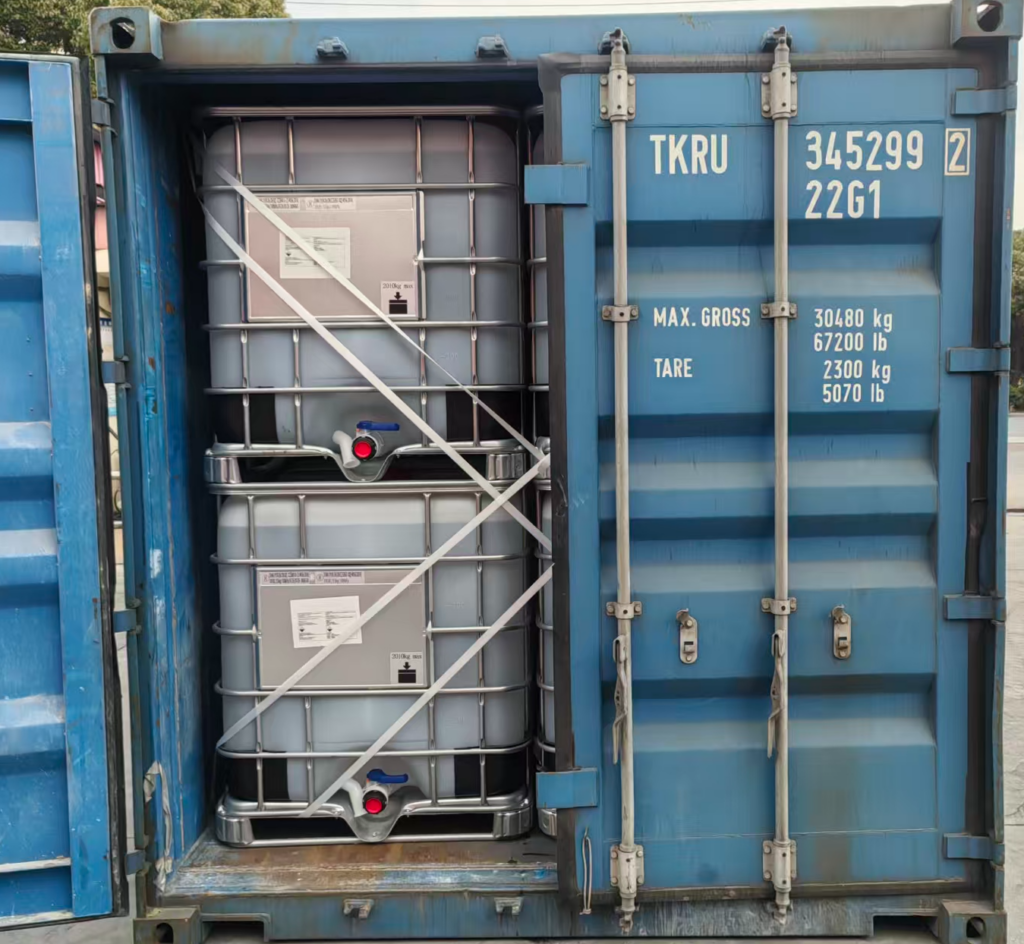
2-Ethylhexanoic Acid should be stored in tightly sealed containers in a cool, dry, and well-ventilated area. The usual packaging is 200L iron drum, IBC container(900KG/IBC) and ISOTANK(21.5MT/ISOTANK)
Recommended storage practices include:
- Keep away from heat and ignition sources
- Avoid direct sunlight
- Prevent contact with strong oxidizing agents
- Use appropriate protective equipment during handling
Proper storage helps maintain product quality throughout its shelf life.