

Полипропилен — это пластик, а именно один конкретный термопласт из семейства полиолефинов, а не альтернатива пластику, как часто спрашивают. “Пластик” — это родительская категория, которая также охватывает полиэтилен (ПЭ), ПВХ, ПЭТ и полистирол (ПС).
So the useful question is not whether PP differs from plastic, but which commodity plastics PP competes with, and where it wins or loses against them. That choice comes down to four or five spec-sheet numbers a buyer can read directly.
2. PP is the lightest commodity plastic, tops the chemical-resistance column, and survives flexing that cracks most of the field. It loses on clarity and stiffness — and one number on its data sheet is read wrong more often than any other.
3. Which Plastics Does PP Compete With?
4. PP competes mainly against PE, PVC, PET, and PS — the commodity thermoplastics a buyer weighs for the same housing, container, or molded part. They separate cleanly on a handful of selection-driving properties, which is why a single positioning view tells you more than any one head-to-head.
5. PE
6. PVC (rigid)
7. PET
8. PS
9. Service temp (°C)
10. ~60–75
11. ~50–80
12. Chemical resistance
13. Very high
14. Moderate
15. Low
16. Stiffness/hardness
17. High
18. Translucent
19. Clear (mod.)
20. Clear
21. Living-hinge/fatigue
22. Excellent
23. Good
24. Poor
25. Density is the cleanest divider: only PP and PE fall below 1.0 g/cm³, and at ~0.90 g/cm³ PP is the lightest commodity plastic there is. PVC sits at roughly 1.4 — over 50% denser — so a PVC part of the same volume weighs far more.
26. Chemical resistance is where PP and PE both pull ahead of the rest. Both rate very high against acids, bases, and organic solvents, and PP absorbs almost no water — 0.01% over 24 hours versus 0.04–0.40% for rigid PVC.
27. That combination is why
28. PP grades
29. earn chemical-tank liners, pipe, and aggressive-cleaning-agent housings. A PP-R pipe grade such as PetroChina Dushanzi T4401 is a typical reference point when the duty is hot water plus chemical exposure.
30. Where PP gives ground is stiffness and clarity. Rigid PVC and PET run stiffer and harder — PVC tensile reaches 34–62 MPa against PP’s 25–40 MPa — and PET, PS, and PC are genuinely clear where PP is only translucent. If the part needs to show its contents or hold a rigid edge, PP is the wrong call.
31. Is Polypropylene Better Than Other Plastics?
32. Three spec-sheet numbers decide whether PP wins — and one of them gets misread constantly:
33. Fatigue life (the living hinge):
34. millions of flex cycles, where PS, PVC, and PC crack after a handful.
35. ~82 °C continuous service ceiling — not the 163.8 °C melt point:
36. the highest service temp in the field, but half the melt figure most buyers quote.
37. Per-part cost, not price per kilogram:
38. among the lowest-cost resins, and the lightest, so a kilogram molds more part.
39. Fatigue life is PP’s signature win, and the reason is molecular orientation: PP molecules line up in the direction of injection-mold flow, so a thin section bending across that orientation flexes without fatiguing. That makes PP the default for flip-top caps, snap closures, and any one-piece hinged box.
40. The catch is design, not resin — the hinge zone has to be deliberately thinned in the tool, because an oversized hinge throws away the cycle life.
41. The misread number is melting point. PP melts at 163.8 °C, and that figure gets read as the temperature a PP part can take in service. It can’t — the continuous service ceiling is roughly 82 °C, half the melt point.
42. That ~82 °C is still the highest in the commodity field, above PE, PS, and PET, so PP wins microwave-safe, hot-fill, and dishwasher duty against its peers. But the 82 °C ceiling, not the 163 °C melt point, governs a sustained hot duty — the line an under-hood or autoclave part often loses to a higher-temperature material.
43. Cost is the last figure worth reading carefully. PP sits among the lowest-cost commodity plastics, on par with PE, but because it is the lightest, a kilogram of PP molds more part volume than a kilogram of any denser resin.
44. Per-part economics, not price per kilogram, decide the cost comparison against PVC or PET. The lowest-density resin and the lowest-cost part are not always the same call — though with PP they tend to point the same way, once you have matched the right
45. PP grade
46. to the part.
47. When PP Is the Right Specification
48. Specify PP when the part needs chemical resistance, low weight, or a living hinge, and can live within an ~82 °C service ceiling. That combination is where PP beats every other commodity plastic at once.
49. Reach elsewhere when the part must be glass-clear (PET or PS), rigid and hard (PVC or PET), or survive sustained heat above ~82 °C. The single mistake to avoid is reading PP’s 163 °C melting point as a service rating. Check the continuous-use temperature against your duty first — it decides more PP specifications than density, cost, or clarity combined.
50. Polypropylene is a plastic — one specific thermoplastic in the polyolefin family, not an alternative to plastic the way the question often gets asked. “Plastic” is the parent category that also covers polyethylene (PE), PVC, PET, and polystyrene (PS). So the useful question is not whether PP differs from plastic, but which commodity plastics PP […].
PP is the lightest commodity plastic, tops the chemical-resistance column, and survives flexing that cracks most of the field. It loses on clarity and stiffness — and one number on its data sheet is read wrong more often than any other.
2. Which Plastics Does PP Compete With?
3. PP competes mainly against PE, PVC, PET, and PS — the commodity thermoplastics a buyer weighs for the same housing, container, or molded part. They separate cleanly on a handful of selection-driving properties, which is why a single positioning view tells you more than any one head-to-head.
4. PE
5. PVC (rigid)
6. PET
7. PS
8. Service temp (°C)
9. ~60–75
10. ~50–80
11. Chemical resistance
12. Very high
13. Moderate
14. Low
15. Stiffness/hardness
16. High
17. Translucent
18. Clear (mod.)
19. Clear
20. Living-hinge/fatigue
21. Excellent
22. Good
23. Poor
24. Density is the cleanest divider: only PP and PE fall below 1.0 g/cm³, and at ~0.90 g/cm³ PP is the lightest commodity plastic there is. PVC sits at roughly 1.4 — over 50% denser — so a PVC part of the same volume weighs far more.
25. Chemical resistance is where PP and PE both pull ahead of the rest. Both rate very high against acids, bases, and organic solvents, and PP absorbs almost no water — 0.01% over 24 hours versus 0.04–0.40% for rigid PVC.
26. That combination is why
27. PP grades
28. earn chemical-tank liners, pipe, and aggressive-cleaning-agent housings. A PP-R pipe grade such as PetroChina Dushanzi T4401 is a typical reference point when the duty is hot water plus chemical exposure.
29. Where PP gives ground is stiffness and clarity. Rigid PVC and PET run stiffer and harder — PVC tensile reaches 34–62 MPa against PP’s 25–40 MPa — and PET, PS, and PC are genuinely clear where PP is only translucent. If the part needs to show its contents or hold a rigid edge, PP is the wrong call.
30. Is Polypropylene Better Than Other Plastics?
31. Three spec-sheet numbers decide whether PP wins — and one of them gets misread constantly:
32. Fatigue life (the living hinge):
33. millions of flex cycles, where PS, PVC, and PC crack after a handful.
Which Plastics Does PP Compete With?
PP competes mainly against PE, PVC, PET, and PS — the commodity thermoplastics a buyer weighs for the same housing, container, or molded part. They separate cleanly on a handful of selection-driving properties, which is why a single positioning view tells you more than any one head-to-head.
| Свойство | PP | PE | PVC (rigid) | PET | PS |
|---|---|---|---|---|---|
| Плотность (г/см³) | 0.90 | 0.91–0.97 | 1.4 | 1.38 | 1.05 |
| Service temp (°C) | ~82 | ~60–75 | ~60 | ~70 | ~50–80 |
| Chemical resistance | Very high | Very high | Moderate | Moderate | Low |
| Stiffness/hardness | Moderate | Low | High | High | High |
| Clarity | Translucent | Translucent | Clear (mod.) | Clear | Clear |
| Living-hinge/fatigue | Excellent | Good | Poor | Poor | Poor |
Density is the cleanest divider: only PP and PE fall below 1.0 g/cm³, and at ~0.90 g/cm³ PP is the lightest commodity plastic there is. PVC sits at roughly 1.4 — over 50% denser — so a PVC part of the same volume weighs far more.
Chemical resistance is where PP and PE both pull ahead of the rest. Both rate very high against acids, bases, and organic solvents, and PP absorbs almost no water — 0.01% over 24 hours versus 0.04–0.40% for rigid PVC.
That combination is why PP grades earn chemical-tank liners, pipe, and aggressive-cleaning-agent housings. A PP-R pipe grade such as PetroChina Dushanzi T4401 is a typical reference point when the duty is hot water plus chemical exposure.
Where PP gives ground is stiffness and clarity. Rigid PVC and PET run stiffer and harder — PVC tensile reaches 34–62 MPa against PP’s 25–40 MPa — and PET, PS, and PC are genuinely clear where PP is only translucent. If the part needs to show its contents or hold a rigid edge, PP is the wrong call.
Is Polypropylene Better Than Other Plastics?
Three spec-sheet numbers decide whether PP wins — and one of them gets misread constantly:
- Fatigue life (the living hinge): millions of flex cycles, where PS, PVC, and PC crack after a handful.
- ~82 °C continuous service ceiling — not the 163.8 °C melt point:
2. the highest service temp in the field, but half the melt figure most buyers quote.
3. Per-part cost, not price per kilogram:
4. among the lowest-cost resins, and the lightest, so a kilogram molds more part.
5. Fatigue life is PP’s signature win, and the reason is molecular orientation: PP molecules line up in the direction of injection-mold flow, so a thin section bending across that orientation flexes without fatiguing. That makes PP the default for flip-top caps, snap closures, and any one-piece hinged box.
6. The catch is design, not resin — the hinge zone has to be deliberately thinned in the tool, because an oversized hinge throws away the cycle life.
7. The misread number is melting point. PP melts at 163.8 °C, and that figure gets read as the temperature a PP part can take in service. It can’t — the continuous service ceiling is roughly 82 °C, half the melt point.
8. That ~82 °C is still the highest in the commodity field, above PE, PS, and PET, so PP wins microwave-safe, hot-fill, and dishwasher duty against its peers. But the 82 °C ceiling, not the 163 °C melt point, governs a sustained hot duty — the line an under-hood or autoclave part often loses to a higher-temperature material.
9. Cost is the last figure worth reading carefully. PP sits among the lowest-cost commodity plastics, on par with PE, but because it is the lightest, a kilogram of PP molds more part volume than a kilogram of any denser resin.
10. Per-part economics, not price per kilogram, decide the cost comparison against PVC or PET. The lowest-density resin and the lowest-cost part are not always the same call — though with PP they tend to point the same way, once you have matched the right
11. PP grade
12. to the part.
13. When PP Is the Right Specification
14. Specify PP when the part needs chemical resistance, low weight, or a living hinge, and can live within an ~82 °C service ceiling. That combination is where PP beats every other commodity plastic at once. the highest service temp in the field, but half the melt figure most buyers quote. - Per-part cost, not price per kilogram: among the lowest-cost resins, and the lightest, so a kilogram molds more part.
Fatigue life is PP’s signature win, and the reason is molecular orientation: PP molecules line up in the direction of injection-mold flow, so a thin section bending across that orientation flexes without fatiguing. That makes PP the default for flip-top caps, snap closures, and any one-piece hinged box.
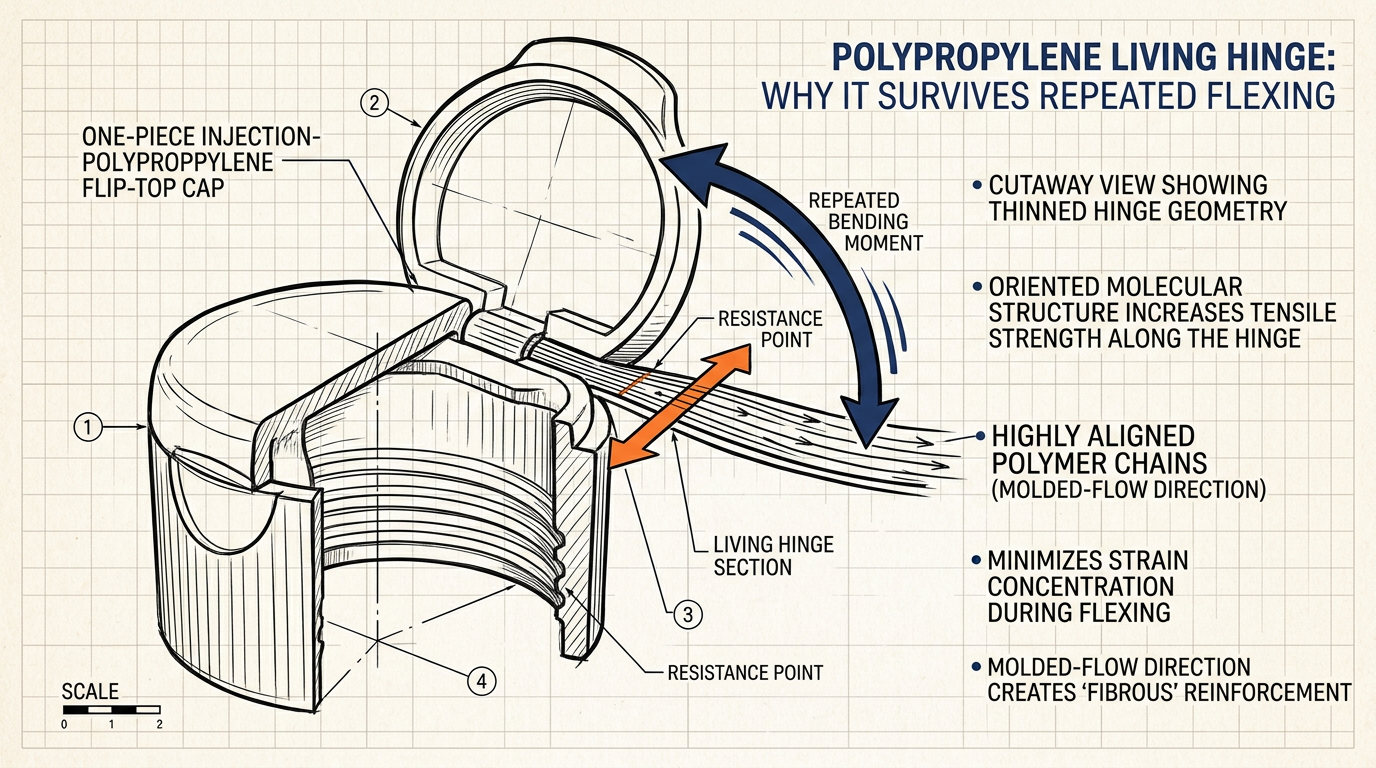
The catch is design, not resin — the hinge zone has to be deliberately thinned in the tool, because an oversized hinge throws away the cycle life.
The misread number is melting point. PP melts at 163.8 °C, and that figure gets read as the temperature a PP part can take in service. It can’t — the continuous service ceiling is roughly 82 °C, half the melt point.
That ~82 °C is still the highest in the commodity field, above PE, PS, and PET, so PP wins microwave-safe, hot-fill, and dishwasher duty against its peers. But the 82 °C ceiling, not the 163 °C melt point, governs a sustained hot duty — the line an under-hood or autoclave part often loses to a higher-temperature material.
Cost is the last figure worth reading carefully. PP sits among the lowest-cost commodity plastics, on par with PE, but because it is the lightest, a kilogram of PP molds more part volume than a kilogram of any denser resin.
Per-part economics, not price per kilogram, decide the cost comparison against PVC or PET. The lowest-density resin and the lowest-cost part are not always the same call — though with PP they tend to point the same way, once you have matched the right PP grade to the part.
When PP Is the Right Specification
Specify PP when the part needs chemical resistance, low weight, or a living hinge, and can live within an ~82 °C service ceiling. That combination is where PP beats every other commodity plastic at once.
Обращайтесь к другим материалам, когда деталь должна быть прозрачной как стекло (ПЭТФ или ПС), жёсткой и твёрдой (ПВХ или ПЭТФ) или выдерживать постоянное нагревание выше ~82 °C. Единственная ошибка, которой следует избегать, — воспринимать температуру плавления ПП в 163 °C как рабочую характеристику. Сначала проверьте температуру непрерывного использования в соответствии с вашими условиями — она определяет спецификации ПП больше, чем плотность, стоимость или прозрачность вместе взятые.