

Применение, производство, устойчивое развитие и рыночные перспективы
# Краткое описание
Химическая промышленность вступает в новую фазу, где устойчивое развитие больше не оценивается исключительно по корпоративным экологическим отчетам — оно все чаще отражается в решениях о закупках, стратегиях составления рецептур и инвестициях в цепочки поставок.
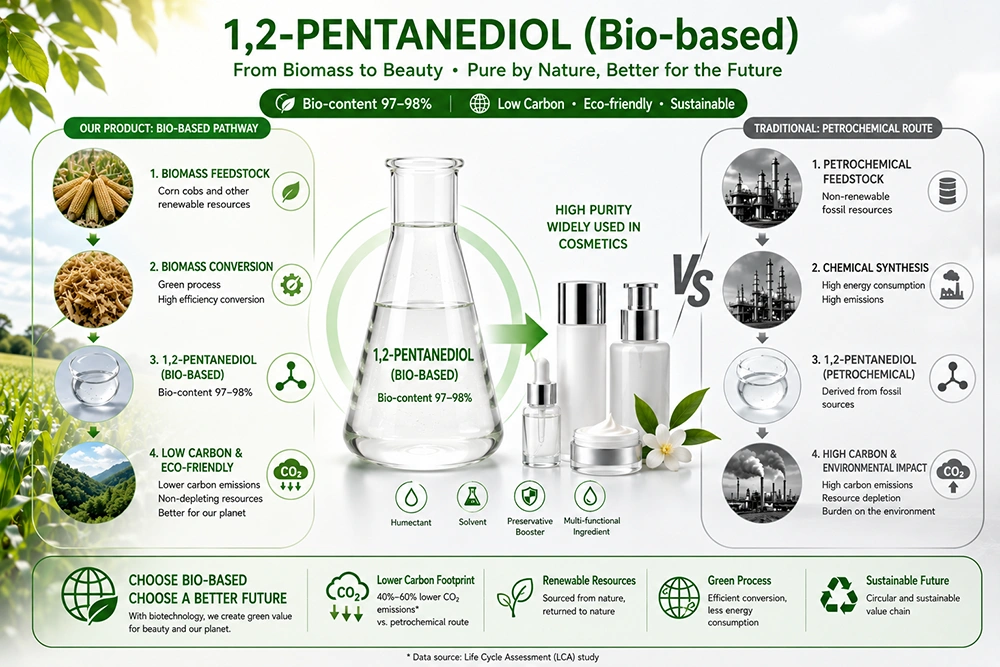
Среди возобновляемых C5-промежуточных соединений, биосырьевой 1,2-пентандиол (также известный как био-основанный пентиленгликоль) стал одним из наиболее пристально отслеживаемых альтернатив традиционным гликолям, получаемым из нефти. В отличие от многих новых “зеленых” ингредиентов, требующих компромиссов в рецептуре, био-основанный 1,2-пентандиол предлагает необычное сочетание экологических преимуществ и привычных технических характеристик. Именно это сочетание привлекает к нему производителей полиуретанов, составителей агрохимических смесей и закупочные команды — покупателей, которым нужны низкоуглеродные сырьевые материалы без перестройки существующей системы.
Возможно, самым убедительным доказательством этого рыночного перехода являются не маркетинговые брошюры, а инвестиции в производство. В 2025 году, Symrise расширила производство своего продукта Hydrolite® 5 Green, запустив новый производственный объект в Гранаде, Испания, дополнив существующий производственный комплекс в США. Компания назвала растущий спрос, надежность поставок и региональную производственную устойчивость ключевыми причинами расширения — это важный сигнал того, что рынок биосырьевых многофункциональных гликолей созревает, а не остается нишевым сегментом.
В то же время на рынок выходят дополнительные производители. Такие компании, как БАСТОНЕ инвестируют в производство коммерческого масштаба с ежегодной производственной мощностью 1000 метрических тонн биосырьевого 1,2-пентандиола с содержанием биосырьевого углерода примерно 97%, предоставляя производителям нижнего звена большую гибкость в sourcing и диверсификацию поставок.
Далее рассматривается, как производится этот материал, что на самом деле сертифицирует содержание возобновляемого углерода, как био-основанный и нефтяной маршруты сравниваются по жизненному циклу, где он применяется в полиуретановых и агрохимических системах, а также какие вопросы задавать поставщику перед квалификацией — вопросы закупки, а не учебник по химии.
# От оптимизации затрат к оптимизации углерода
Десять лет назад обсуждения 1,2-пентандиола обычно сосредотачивались на технических характеристиках.
Может ли он улучшить увлажнение?
Повысит ли он эффективность консервантов?
Может ли он заменить гликоли с более высоким раздражающим потенциалом?
Сегодня разговоры в лабораториях разработки рецептур заметно изменились.
Многие совещания по разработке продуктов теперь начинаются с таких вопросов, как:
“Можем ли мы сократить сырье, получаемое из ископаемых источников?”
“Можем ли мы увеличить содержание возобновляемых компонентов без изменения характеристик?”
“Будет ли этот ингредиент поддерживать наши цели ESG?”
Этот сдвиг отражает более широкие изменения во всей отрасли специальных химикатов.
Менеджеры по закупкам все чаще оценивают поставщиков с использованием экологических показателей наряду с традиционными критериями качества. Корпоративные команды по устойчивому развитию запрашивают данные о возобновляемом углероде. Владельцы брендов ищут ингредиенты, способные поддержать обязательства по сокращению выбросов углерода без внесения рисков в рецептуры.
Один опытный менеджер по закупкам из многонационального производителя косметики недавно резюмировал меняющиеся приоритеты отрасли:
“Пять лет назад мы в основном сравнивали цену и качество. Сегодня мы также оцениваем, откуда поступает углерод”.”
Это наблюдение отражает одну из определяющих тенденций современного рынка специальных химикатов.
# Что такое био-основанный 1,2-пентандиол?
Биосырьевой 1,2-пентандиол химически идентичен традиционному 1,2-пентандиолу нефтяного происхождения.
Оба материала имеют:
- идентичную молекулярную структуру
- идентичный номер CAS
- сопоставимые физические свойства
- аналогичную совместимость с рецептурами
- эквивалентные многофункциональные характеристики
Ключевое различие заключается не в том, что представляет собой молекула, а в том, откуда происходят ее атомы углерода.
Традиционный 1,2-пентандиол синтезируется из ископаемого сырья, в конечном итоге получаемого из сырой нефти.
Био-основанный 1,2-пентандиол заменяет большинство этих ископаемых атомов углерода на углерод, происходящий из возобновляемой биомассы.
В зависимости от технологии производства возобновляемое сырье может включать:
- сельскохозяйственные остатки
- лигноцеллюлозную биомассу
- производные кукурузных початков
- растительные углеводы
- другие возобновляемые источники углерода
Высококачественное коммерческое производство теперь может достигать примерно 97%, что означает, что почти весь молекулярный углеродный каркас происходит из возобновляемых ресурсов, а не из ископаемых углеводородов.
Это различие становится все более важным, поскольку воздействие на окружающую среду зависит не только от конечной молекулы, но и от происхождения ее углерода.
# Био-основанный не означает биоразлагаемый
Одно недоразумение, часто встречающееся в технических обсуждениях, — это предположение, что “био-основанный” автоматически означает “биоразлагаемый”.”
Это не так.
Это совершенно разные понятия.
Био-основанный описывает происхождение сырья.
Биоразлагаемость описывает поведение материала после использования.
Ингредиент может быть:
- био-основанным и биоразлагаемым,
- био-основанным, но не легко биоразлагаемым,
- полученным из нефти, но биоразлагаемым.
Поэтому опытные разработчики формул оценивают эти свойства независимо, а не рассматривают их как взаимозаменяемые показатели устойчивости.
Понимание этого различия помогает закупочным командам избегать выбора сырья исключительно на основе экологических маркетинговых заявлений.
# Как производится био-основанный 1,2-пентандиол?
Хотя производители используют запатентованные технологии, коммерческое производство обычно следует аналогичному пути.
В отличие от многих товарных химикатов, задача производства заключается не просто в получении молекулы.
Поддержание постоянной чистоты, минимизация остаточных примесей, контроль цвета и достижение стабильных профилей запаха одинаково важны — особенно для косметических применений.
Опытные технологические инженеры часто отмечают, что последующая очистка значительно влияет на качество коммерческого продукта. Два материала с одинаковым химическим названием могут вести себя по-разному в чувствительных формулах, если профили примесей различаются.
По этой причине закупочные команды часто проверяют аналитические спецификации — включая чистоту, цвет по APHA, содержание влаги и остаточные примеси — наряду с показателями устойчивости.
# Почему содержание возобновляемого углерода имеет значение
Содержание возобновляемого углерода стало одним из наиболее часто запрашиваемых технических параметров для био-основанных химикатов.
В отличие от маркетинговых терминов, таких как “натуральный” или “зеленый”, содержание возобновляемого углерода дает измеримый показатель того, какая часть продукта происходит из возобновляемых биологических ресурсов.
Продукт, содержащий примерно 97% био-основанного углерода демонстрирует, что почти все атомы углерода, включенные в конечную молекулу, происходят из возобновляемой биомассы, а не из ископаемых ресурсов.
Для производителей это способствует достижению нескольких стратегических целей:
- снижение зависимости от нефтяного сырья,
- поддержка корпоративных стратегий декарбонизации,
- улучшение отчетности по возобновляемым материалам,
- укрепление раскрытий ESG,
- согласование с обязательствами клиентов по устойчивому развитию.
Важно, что содержание возобновляемого углерода не подразумевает снижение производительности продукта.
С точки зрения разработки формул, большинство инженеров гораздо больше заботятся о стабильности, чем о происхождении сырья. Способность сохранять идентичные технические характеристики при переходе на возобновляемый углерод — именно то, что делает био-основанный 1,2-пентандиол коммерчески привлекательным.
# Эволюция рынка био-основанного 1,2-пентандиола
Разработка био-основанного 1,2-пентандиола отражает более широкие изменения в отрасли специальных химикатов.
Вместо того чтобы появиться в одночасье, рынок развивался постепенно, параллельно с достижениями в области возобновляемой химии, зеленых производственных технологий и потребительского спроса на более устойчивые продукты.
| Год | Отраслевая веха | Рыночная значимость |
|---|---|---|
| До 2010 года | Пентандиол нефтяного происхождения доминировал в коммерческих поставках | Устойчивость редко была критерием закупок |
| 2013–2016 | Растущий интерес к возобновляемым косметическим ингредиентам | Ранний спрос со стороны натуральных и чистых косметических брендов |
| 2018 | Symrise коммерчески запустила Hydrolite® 5 Green, био-основанный пентиленгликоль | Ознаменовало одно из первых крупномасштабных коммерческих внедрений биоосновного многофункционального пентиленгликоля |
| 2020–2024 | Более широкое внедрение возобновляемых многофункциональных ингредиентов премиальными косметическими брендами | Устойчивость стала частью квалификации поставщиков, а не просто маркетинговым заявлением |
| 2025 | Symrise ввела в эксплуатацию новое производственное подразделение Hydrolite® 5 Green в Гранаде, Испания, в дополнение к своему объекту в США | Продемонстрировало продолжающиеся инвестиции в производственные мощности и уверенность в долгосрочном рыночном спросе |
| Сегодня | Дополнительные производители, включая BASTONE, вышли на коммерческое производство | Предложение становится более диверсифицированным, что улучшает устойчивость поставок и поддерживает более широкое внедрение возобновляемых ингредиентов |
Одна тенденция выделяется на этой временной шкале: рост рынка был обусловлен меньше изменениями в химии, чем изменениями в приоритетах закупок.
Сама молекула осталась прежней. Изменилось то, как производители оценивают воздействие на окружающую среду углерода, встроенного в нее.
# Рост рынка подтверждается инвестициями в производство
Один из самых сильных показателей зрелости рынка — это не количество запусков продуктов, а готовность производителей инвестировать в новые производственные активы.
В 2025 году Symrise объявила о запуске нового производственного подразделения Hydrolite® 5 Green в Гранаде, Испания, в дополнение к своим существующим производственным операциям в Соединенных Штатах. По словам компании, инвестиции были направлены на расширение производственных мощностей, укрепление безопасности поставок, сокращение транспортных расстояний для европейских клиентов и поддержку растущего спроса на биоосновные многофункциональные косметические ингредиенты.
Хотя Symrise не раскрыла объемы производства или годовые показатели продаж Hydrolite® 5 Green, само расширение дает значимый рыночный сигнал. В отрасли специальных химикатов новые производственные объекты обычно отражают долгосрочную уверенность в спросе, а не краткосрочные рыночные колебания.
Эти инвестиции также подчеркивают еще одну важную тенденцию: устойчивость все больше влияет на то, где производятся продукты, а также на то, как они производятся. Региональное производство может сократить цепочки поставок, повысить устойчивость и потенциально снизить выбросы, связанные с транспортировкой — факторы, на которые команды закупок обращают все больше внимания по мере того, как экологическая отчетность становится более сложной.
# Часть 2 — Техническое сравнение, оценка жизненного цикла (LCA), углеродный след и промышленное применение
# Био-основанный и нефтяной 1,2-пентандиол: в чем реальная разница?
Один из самых частых вопросов, возникающих при квалификации поставщиков, на удивление прост:
“Если молекулярная структура одинакова, почему мы должны переключаться?”
С химической точки зрения ответ кажется очевидным — оба продукта химически идентичны.
Однако с точки зрения закупок и устойчивости ответ гораздо более нюансирован.
Опытные инженеры-рецептурщики редко меняют сырье просто потому, что оно возобновляемое. Вместо этого решение обычно включает балансирование технических характеристик, стабильности поставок, регуляторных ожиданий, целей устойчивости клиентов и долгосрочной бизнес-стратегии.
На практике реальное различие между биоосновным и нефтяным 1,2-пентандиолом заключается не в функциональных характеристиках, а в пути производства на верхнем уровне и экологическом профиле, связанном с этим путем.
# Техническое сравнение: био-основанный и нефтяной
| Параметр | Биоосновной 1,2-пентандиол | Нефтяной 1,2-пентандиол |
|---|---|---|
| Источник углерода | Возобновляемая биомасса | Сырая нефть / petrochemические виды сырья |
| Молекулярная структура | Идентичный | Идентичный |
| Номер CAS | Тот же самый | Тот же самый |
| Физические свойства | Эквивалентный | Эквивалентный |
| Влагоудерживающая способность | Эквивалентный | Эквивалентный |
| Растворимость | Эквивалентный | Эквивалентный |
| Усиление консервантов | Эквивалентный | Эквивалентный |
| Совместимость с рецептурами | Эквивалентный | Эквивалентный |
| Содержание возобновляемого углерода | До 97% | 0% |
| Потенциальный углеродный след | Как правило, ниже* | Обычный ископаемый базовый уровень |
| Вклад в ESG | Сильный | Ограниченный |
| Восприятие потребителей | Возобновляемый, устойчивый | Традиционный |
| Будущая тенденция закупок | Все более предпочтительный | Зрелый рынок |
*Фактический углеродный след зависит от источника сырья, эффективности производства, энергетического баланса, транспортировки и методологии распределения. Данные оценки жизненного цикла (LCA) для конкретного продукта всегда следует запрашивать у поставщиков.
# Почему характеристики обычно не являются решающим фактором
Заблуждение, с которым иногда сталкиваются покупатели, заключается в том, что возобновляемые химикаты автоматически работают лучше — или хуже — чем традиционные продукты.
В действительности опытные химики-рецептурщики знают, что происхождение углерода не определяет эффективность рецептуры.
Что определяет эффективность, так это качество производства.
Например:
- эффективность очистки
- остаточные органические примеси
- следовые остатки катализатора
- профиль запаха
- контроль влажности
- цвет по шкале APHA
- стабильность партий
Эти параметры оказывают гораздо большее влияние на стабильность косметических рецептур, чем то, изначально ли атомы углерода получены из сырой нефти или биомассы.
Один менеджер по рецептурам, опрошенный в ходе отраслевых дискуссий, хорошо это резюмировал:
“Наша проблема не в том, поступил ли углерод из нефти или биомассы. Наша проблема в том, ведет ли себя каждая производственная партия абсолютно одинаково”.”
Это утверждение отражает то, как промышленные пользователи на самом деле оценивают специализированные ингредиенты.
# За пределами химии: почему закупочные команды по-разному смотрят на био-основанные материалы
Исторически решения о закупках определялись тремя переменными:
- Цена
- Качество
- Надежность поставок
Сегодня многие многонациональные производители оценивают дополнительные критерии:
- Содержание возобновляемого углерода
- Углеродный след продукта (PCF)
- Эффективность поставщиков в области ESG
- Географический производственный след
- Устойчивость цепочки поставок
- Готовность к регулированию
Этот сдвиг особенно заметен среди мировых косметических брендов, работающих в Европе, Северной Америке, Японии и Южной Корее, где отчетность по устойчивому развитию все больше влияет на решения о покупке.
Следовательно, био-основанное сырье часто оценивается не как “премиальные альтернативы”, а как стратегические активы, поддерживающие долгосрочные корпоративные цели устойчивого развития.
# Понимание оценки жизненного цикла (LCA)
Одним из самых больших изменений в химической промышленности за последнее десятилетие стало растущее использование оценки жизненного цикла (LCA).
Вместо оценки только готового продукта LCA учитывает воздействие на окружающую среду на протяжении всего жизненного цикла.
Для специальных химикатов этот более широкий взгляд часто показывает, что наибольшее воздействие на окружающую среду происходит задолго до того, как материал достигает клиента.
Типичная оценка «от колыбели до ворот»
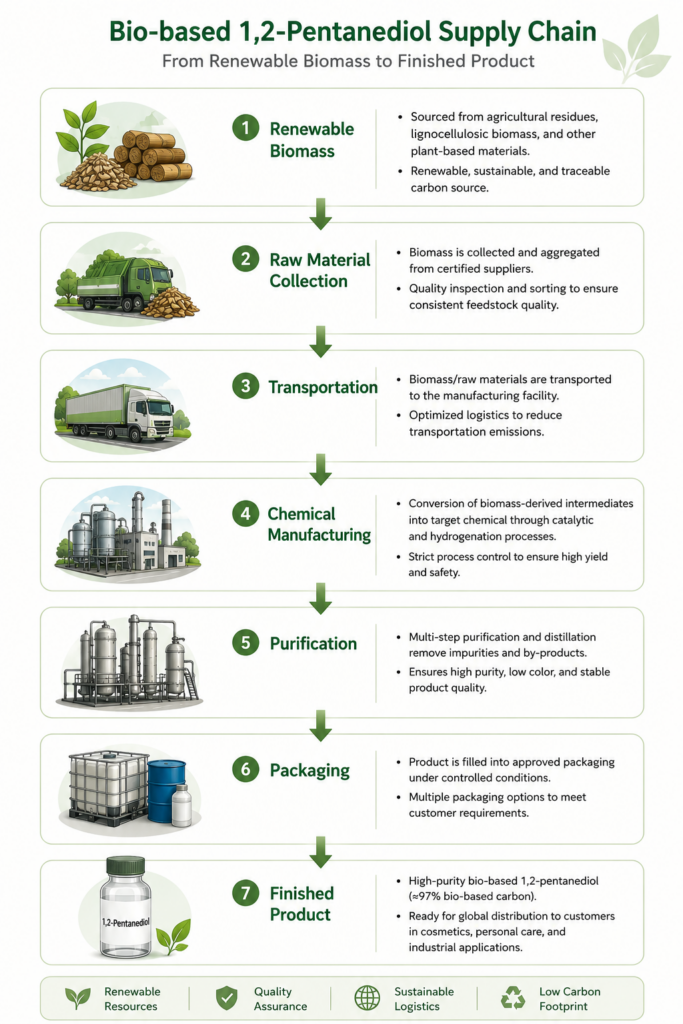
Для типичных продуктов upstream-этапы различаются:
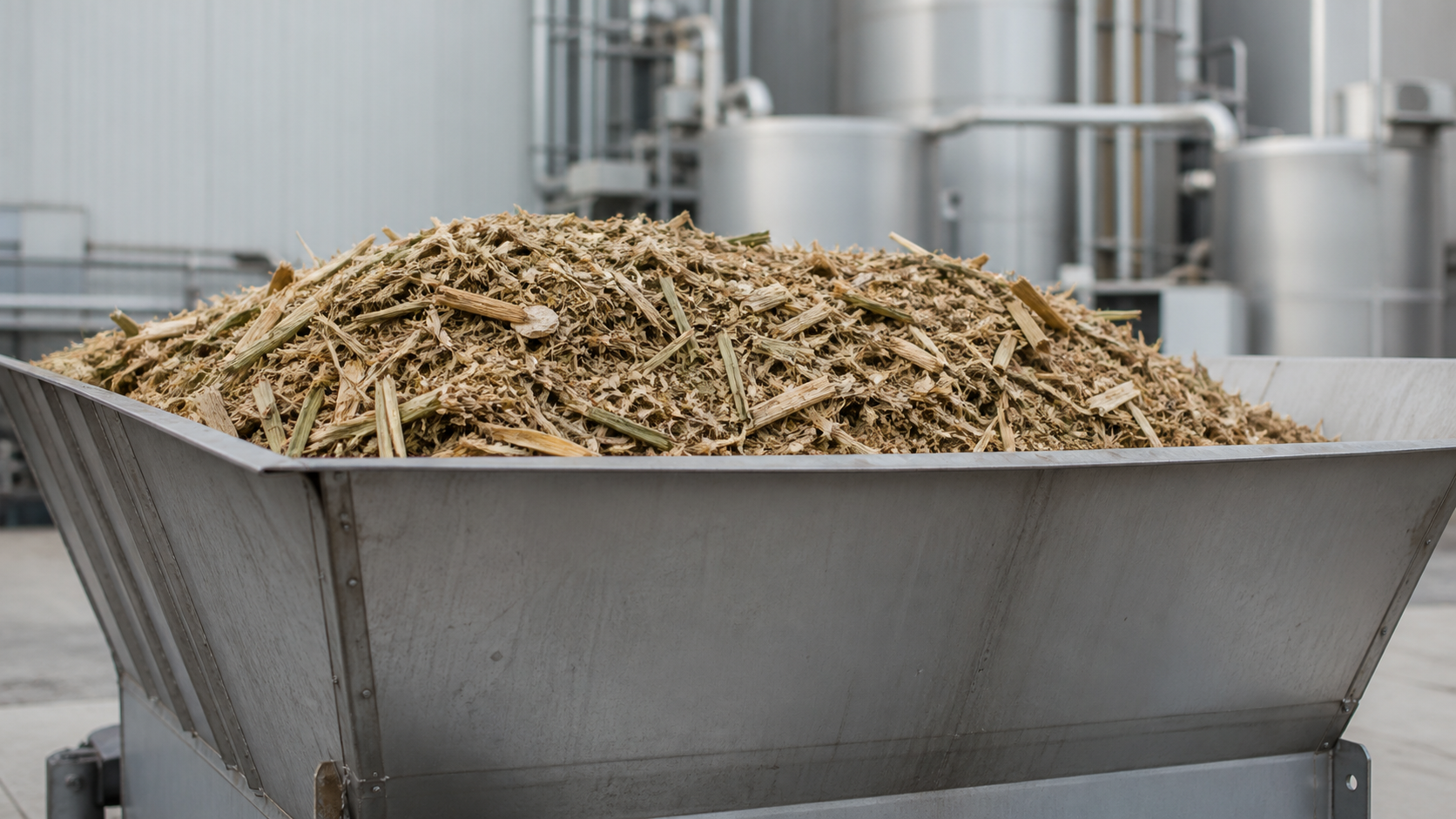
Хотя downstream-производственные этапы могут выглядеть одинаково, происхождение углерода принципиально меняет экологический профиль продукта.
# Почему возобновляемое сырье может снизить углеродный след
Важно избегать упрощения обсуждения.
Многие статьи утверждают:
“Био-основанные продукты имеют более низкие выбросы углерода”.”
Хотя это часто верно по направлению, реальная ситуация более сложна.
Углеродный след зависит от нескольких переменных:
Происхождение сырья
Сельскохозяйственные остатки обычно имеют иной экологический профиль, чем продовольственные культуры.
Источник энергии
Производство на возобновляемой электроэнергии значительно отличается от производства на угольной электроэнергии.
Производство водорода
Водород, используемый в каталитической переработке, может происходить из возобновляемых или ископаемых источников.
Расстояние транспортировки
Международная перевозка биомассы может частично нивелировать экологическую выгоду.
Эффективность производства
Более высокая эффективность конверсии обычно приводит к меньшим выбросам на тонну готовой продукции.
Поэтому опытные специалисты по устойчивому развитию редко сравнивают продукты, используя только общие заявления. Вместо этого они запрашивают экологическую документацию от конкретного поставщика.
# Почему 97% био-основанный углерод не означает 97% более низкие выбросы углерода
Это одна из самых неправильно понимаемых тем в области возобновляемых химикатов.
Некоторые маркетинговые материалы непреднамеренно создают впечатление, что:
97% био-основанного углерода
=
97% сокращение выбросов углерода.
Это неверно.
Содержание биоуглерода измеряет откуда происходит углерод.
Углеродный след измеряет сколько парниковых газов выбрасывается в процессе производства.
Это совершенно разные показатели.
Например:
Производитель может выпускать продукт, содержащий 97% возобновляемого углерода, используя при этом электроэнергию, вырабатываемую на угольных электростанциях.
И наоборот, другой производитель может достичь сравнительно более низкого углеродного следа за счет возобновляемой электроэнергии, более высокой эффективности процессов и оптимизированной логистики.
Поэтому содержание возобновляемого углерода следует рассматривать как один важный показатель устойчивости, а не как полную экологическую оценку.
Это различие становится все более важным, поскольку закупочные команды запрашивают как данные о возобновляемом содержании, так и проверенные данные о углеродном следе продукта (PCF).
# Углеродный след становится показателем закупок
Во многих многонациональных химических компаниях отчетность по устойчивому развитию постепенно переходит из ежегодных отчетов ESG в рутинные решения о закупках.
Вместо простого вопроса:
“Какова ваша цена?”
Покупатели все чаще спрашивают:
- Есть ли у вас документация по углеродному следу продукта?
- Каково содержание возобновляемого углерода?
- Работает ли ваше производственное предприятие на возобновляемой электроэнергии?
- Проводили ли вы LCA, соответствующую стандартам ISO?
- Как вы проверяете свои экологические заявления?
Несколько лет назад эти вопросы обычно задавали только крупным многонациональным поставщикам.
Сегодня они становятся обычными даже среди производителей среднего размера, стремящихся получить статус предпочтительного поставщика.
# Промышленное применение
Рынок этой молекулы вырос в сфере личной гигиены, и туда до сих пор уходит большая часть объемов. Поддержку по рецептурам для этой стороны обеспечивает наша дочерняя компания Bastone Industries, которая занимается косметическим и личным уходом сортом. Промышленно-промежуточная сторона той же молекулы — это канал, который обслуживает данный каталог.
Общая тема этих применений — потребность в диоле, который одновременно обеспечивает технические характеристики и подтверждаемое возобновляемое содержание.
# Полиуретановые системы
1,2-Пентандиол используется как удлинитель цепи и полиольный компонент в полиуретановых системах. Разветвлённая C5-структура находится между короткими гликолями и более длинными линейными диолами: вторичная гидроксильная группа реагирует медленнее, чем первичная, что даёт технологам возможность контролировать время гелеобразования без переформулирования всей системы.
Покупатели, оценивающие его здесь, обычно работают над:
- рецептурами гибких и полужестких пен,
- системами покрытий и клеев, где важен профиль отверждения,
- литыми эластомерными системами, требующими заявления о биосодержании.
Вопрос при закупке редко заключается в том, работает ли химия — он в том, можно ли задокументировать содержание возобновляемого углерода до стандарта, которого требует отчётность по устойчивому развитию конечного заказчика.
# Агрохимические рецептуры
Второй промышленный канал — агрохимические рецептуры, где 1,2-пентандиол функционирует как растворитель и соформулянт для активных ингредиентов, которые трудно удерживать в растворе.
Что важно при покупке, уже, чем в сфере личного ухода: растворяющая способность для конкретного активного вещества, совместимость с остальной частью рецептуры и — всё чаще — позволяет ли соформулянт возобновляемого происхождения готовому продукту нести заявление о биосодержании на рынки, которые это вознаграждают.
Объёмы на одну рецептуру небольшие. Причина квалифицировать биосодержащий сорт здесь обычно — корпоративная цель по содержанию возобновляемых компонентов, применяемая ко всей линейке продуктов, а не экономика отдельного ингредиента.
# Специальные химикаты
Помимо двух указанных каналов, производители специальных химикатов оценивают биосодержащий 1,2-пентандиол для:
- специальных растворителей,
- функциональных промежуточных продуктов,
- промышленных рецептур,
- функциональных добавок.
Здесь устойчивость часто дополняет — а не заменяет — технические характеристики.
Менеджеры по закупкам часто описывают возобновляемое содержание как “дополнительное преимущество, а не основной критерий покупки”.”
# Частые ошибки при оценке биосодержащих материалов
Во время квалификации поставщиков появляется несколько повторяющихся заблуждений.
Ошибка 1: Предположение, что биосодержащее означает лучшие характеристики
Характеристики зависят от качества продукта, а не от возобновляемого происхождения.
Ошибка 2: Сравнение цены без учёта ценности устойчивости
Самая низкая закупочная цена не обязательно означает самые низкие общие бизнес-затраты.
Ошибка 3: Игнорирование стабильности производства
Одна нестабильная производственная партия может легко стоить больше, чем годы незначительной экономии на сырье.
Ошибка 4: Предположение, что все биосодержащие продукты эквивалентны
Возобновляемое сырьё, технология очистки, аналитический контроль и системы качества значительно различаются между производителями.
Ошибка 5: Игнорирование будущих регуляторных тенденций
Многие компании до сих пор закупают сырьё, основываясь только на сегодняшних требованиях.
Опытные менеджеры по закупкам всё чаще оценивают, могут ли поставщики поддерживать будущую отчётность по устойчивому развитию и инициативы по снижению выбросов углерода.
# Часть 3 — Выбор поставщика, рыночные перспективы, производственные возможности BASTONE и FAQ
# Выбор правильного поставщика биосодержащего 1,2-пентандиола
Для сырьевых химикатов выбор поставщика часто начинается и заканчивается ценой.
Биосодержащие специальные ингредиенты — другое дело.
По мере того как устойчивость внедряется в политику закупок, от менеджеров по закупкам ожидается оценка не только стоимости, но также технической стабильности, производственных возможностей, экологических характеристик и долгосрочной устойчивости поставок.
Один директор по закупкам из многонационального производителя средств личного ухода кратко резюмировал эту проблему:
“Сменить поставщика редко сложно. Квалифицировать нового поставщика — сложно”.”
Стоимость повторной валидации рецептуры, регуляторного пересмотра, одобрения клиентов и производственного риска часто превышает кажущуюся экономию от выбора самого дешёвого предложения.
По этой причине опытные закупочные команды всё чаще оценивают поставщиков через более широкую техническую и коммерческую рамку.
# Семь вопросов, которые закупочные команды должны задать
Каково содержание возобновляемого углерода?
Не все биосодержащие продукты одинаково биосодержащие.
Спросите поставщиков, как измеряется содержание возобновляемого углерода и подтверждается ли оно признанными аналитическими методами или сторонней верификацией.
Продукт, содержащий примерно 97% био-основанного углерода демонстрирует существенно сниженную зависимость от ископаемого сырья, но покупатели должны запрашивать подтверждающую документацию, а не полагаться только на маркетинговые заявления.
Может ли поставщик поддерживать стабильное качество продукции?
Стабильность важнее, чем отдельные аналитические результаты.
Закупочные команды должны оценивать:
- Воспроизводимость от партии к партии
- Чистота
- цвет по шкале APHA
- Содержание влаги
- Профиль запаха
- Контроль примесей
Эти факторы напрямую влияют на стабильность рецептуры и эффективность производства.
Есть ли у поставщика коммерческие производственные мощности?
Успех в лаборатории не всегда означает надежность в промышленных масштабах.
Важные вопросы включают:
- Годовой объем производства
- Количество производственных линий
- Резервирование производства
- Стратегия запасов
- Возможность расширения
По мере роста спроса на возобновляемые многофункциональные ингредиенты безопасность поставок становится важным конкурентным преимуществом.
Может ли поставщик обеспечить соблюдение нормативных требований?
В зависимости от целевых рынков заказчики могут требовать документацию, касающуюся:
- REACH
- TSCA
- Системы менеджмента качества ISO
- Косметические нормативные требования
- Документация по безопасности продукции
Техническая поддержка часто становится не менее ценной, чем сам продукт.
Понимает ли поставщик устойчивость за пределами маркетинга?
Опытные покупатели все чаще различают заявления об устойчивости и доказательства устойчивости.
Полезная вспомогательная информация может включать:
- Содержание возобновляемого углерода
- Углеродный след продукта (при наличии)
- Документация по оценке жизненного цикла
- Место производства
- Инициативы по возобновляемой энергии
Является ли цепочка поставок географически диверсифицированной?
Сбои, пережитые за последние годы, подтвердили один урок:
Устойчивость поставок становится не менее важной, чем качество производства.
Многие закупочные команды сейчас активно ищут географически диверсифицированные источники поставок, чтобы снизить зависимость от одного региона.
Инвестирует ли поставщик в долгосрочную перспективу?
Постоянные инвестиции поставщика в производственные мощности — один из наиболее надежных сигналов, доступных покупателю.
Проекты расширения обычно отражают уверенность в будущем спросе и приверженность долгосрочному участию на рынке.
# Производственные мощности становятся конкурентным преимуществом
По мере ускорения внедрения биооснованных специальных химикатов производственные возможности становятся все более важными.
Недавние события в отрасли иллюстрируют эту тенденцию.
В 2025 году компания Symrise расширила производство Hydrolite® 5 Green путем ввода в эксплуатацию нового производственного подразделения в Гранаде, Испания, дополняющего существующее производственное предприятие в США. По словам компании, инвестиции были направлены на укрепление безопасности поставок, увеличение производственных мощностей, сокращение транспортных расстояний для европейских клиентов и поддержку растущего спроса на возобновляемые многофункциональные ингредиенты.
Хотя Symrise не раскрыла публично производственные мощности или годовые объемы продаж Hydrolite® 5 Green, такие инвестиции обычно рассматриваются в химической отрасли как свидетельство устойчивой рыночной уверенности, а не краткосрочных колебаний спроса.
Значение выходит за рамки объема производства.
Расширение мощностей снижает риск поставок, улучшает региональную доступность и отражает растущую важность возобновляемого сырья в глобальных цепочках поставок средств личной гигиены.
# Поддержка диверсифицированной глобальной цепочки поставок
По мере расширения рынка дополнительные производители вносят вклад в диверсификацию поставок.
BASTONE в настоящее время располагает годовым объемом производства 1000 метрических тонн биооснованного 1,2-пентандиола, производимого с использованием примерно 97%.
Вместо того чтобы позиционировать устойчивость как единственное конкурентное преимущество, BASTONE сосредотачивается на трех приоритетах, ценимых промышленными клиентами:
- Стабильное качество продукции
- Стабильные коммерческие поставки
- Надежная техническая поддержка
Для менеджеров по закупкам диверсификация квалифицированных поставщиков может повысить устойчивость цепочки поставок, обеспечивая при этом большую гибкость по мере continued роста спроса на возобновляемое сырье.
# Обзор рынка: Что будет стимулировать рост в следующем десятилетии?
Рынок био-основанного 1,2-пентандиола все еще относительно молод, однако несколько структурных тенденций указывают на continued долгосрочный рост.
В отличие от краткосрочных потребительских трендов, эти драйверы возникают из более широких изменений в производстве, регулировании и корпоративной устойчивости.
Декарбонизация продолжит влиять на выбор сырья
Многие транснациональные компании объявили о целях по сокращению выбросов углерода, охватывающих 2030, 2040 или 2050 годы.
Хотя отдельные стратегии реализации различаются, ожидается, что возобновляемое сырье будет играть все более важную роль.
Закупки станут более ориентированными на данные
Будущие оценки поставщиков, вероятно, будут включать:
- Содержание возобновляемого углерода
- Углеродный след продукта
- Данные о выбросах Scope 3
- Документацию LCA
- Прозрачность цепочки поставок
Экологические данные могут стать такими же обычными, как технические спецификации.
Многофункциональные ингредиенты станут более ценными
Вместо добавления нескольких специальных добавок, разработчики формул все чаще ищут ингредиенты, способные выполнять несколько функций одновременно.
Био-основанный 1,2-пентандиол хорошо соответствует этой тенденции, сочетая увлажняющие свойства, растворительную способность, усиление консервантов и совместимость с формулой в одном ингредиенте.
Диверсификация поставок продолжится
Ожидается, что рост спроса побудит дополнительных производителей выйти на рынок.
Большее разнообразие поставщиков должно улучшить безопасность поставок, поддерживая при этом более широкое внедрение в разных регионах.
Устойчивость сместится от дифференциации к ожиданию
Возможно, самая важная долгосрочная тенденция — культурная, а не техническая.
Несколько лет назад возобновляемые ингредиенты помогали продуктам выделяться.
Все чаще они становятся ожидаемыми.
Как заметил один старший менеджер по разработке формул:
“Клиенты больше редко спрашивают, можем ли мы создавать формулы с устойчивыми ингредиентами. Они предполагают, что мы уже это делаем”.”
# Заключение
Био-основанный 1,2-пентандиол представляет собой не просто возобновляемую альтернативу обычному гликолю.
Он иллюстрирует, как индустрия специальных химикатов эволюционирует от фокуса только на производительности молекулы к более широкой оценке происхождения углерода, устойчивости производства, устойчивости поставок и долгосрочной экологической ответственности.
Технически био-основанный и нефтяной 1,2-пентандиол обеспечивают сопоставимую функциональность в большинстве применений.
Коммерчески, однако, возобновляемые пути производства предоставляют производителям возможности снизить зависимость от ископаемых ресурсов, поддерживая при этом все более амбициозные цели устойчивости.
Continued расширение производственных мощностей established поставщиками — и появление новых коммерческих производителей — предполагает, что био-основанные многофункциональные гликоли steadily переходят от нишевых ингредиентов к основным промышленным материалам.
Для инженеров по разработке формул переход часто может быть достигнут с минимальными изменениями в существующих формулах.
Для менеджеров по закупкам это предоставляет дополнительный инструмент для балансирования производительности, безопасности поставок и корпоративных обязательств по устойчивости.
В конечном счете, вопрос больше не в том, технически ли осуществимы возобновляемые многофункциональные ингредиенты.
Более актуальный вопрос — как быстро они станут новым отраслевым стандартом.
# Часто задаваемые вопросы (FAQ)
Что такое био-основанный 1,2-пентандиол?
Био-основанный 1,2-пентандиол химически идентичен обычному 1,2-пентандиолу, но производится в основном из возобновляемой биомассы вместо ископаемого сырья.
Является ли био-основанный 1,2-пентандиол тем же самым, что и пентиленгликоль?
Да. Пентиленгликоль — это название INCI, поэтому та же молекула появляется под этим ярлыком в документации по уходу за личностью и как 1,2-пентандиол в промышленном техническом паспорте.
Работает ли био-основанный 1,2-пентандиол по-другому?
При эквивалентных стандартах качества его увлажняющая, растворительная и усиливающая консерванты производительность generally сопоставима с сортами на нефтяной основе.
Что означает 97% био-основанного углерода?
Это указывает на то, что приблизительно 97% атомов углерода в молекуле происходят из возобновляемой биомассы, а не из ископаемых ресурсов.
Означает ли 97% био-основанного углерода 97% более низкие выбросы углерода?
Нет. Содержание возобновляемого углерода и углеродный след — это разные показатели. Фактические выбросы парниковых газов зависят от всей производственной системы, включая сырье, источники энергии, транспортировку и эффективность производства.
Какие отрасли используют био-основанный 1,2-пентандиол?
На промышленной стороне: полиуретановые системы, агрохимические формулы и отдельные специальные химические применения. Самый большой тоннаж в целом по-прежнему приходится на уход за личностью, который покрывает наша сестринская компания Bastone Industries.
Почему глобальные поставщики расширяют производство?
Публичные заявления ведущих производителей указывают на то, что инвестиции обусловлены растущим спросом, улучшением надежности поставок и растущим внедрением возобновляемых многофункциональных ингредиентов.
Что следует учитывать покупателям при выборе поставщика?
Помимо цены, покупателям следует оценивать содержание возобновляемого углерода, качество продукции, производственные мощности, нормативную поддержку, техническую документацию и долгосрочную надежность поставок.